
The problem nobody talks about
You bought a lemon vibrator because everyone said it was better. And then it felt like too much. Or not enough. Or weirdly intense one day and meh the next. So you assumed something was wrong with you. It wasn't. It's that clitoral sensitivity is not a fixed dial. It moves.
I see this constantly in my practice: people who think their sensitivity issues mean the toy doesn't work for them, when really they just haven't matched the intensity to their actual state. Here's what you need to know.
Why intensity matters more than power
A lemon clitoral vibrator like the Hello Nancy Lem works differently than traditional vibrators. Instead of constant buzzing, it uses air-pulse suction that builds sensation gradually. That design detail is crucial because it means the Lem's intensity isn't just about numerical strength. It's about how the stimulation reaches your tissue, and that depends entirely on where your sensitivity sits on any given day.
Traditional vibrators? They're one-note. Intense from the jump. A lemon sucker gives you control in real time. That's the whole point. But you have to know what control actually looks like.
There are five major factors that shift your clitoral sensitivity week to week, sometimes day to day.
Factor 1: Your hormonal cycle
If you menstruate, your clitoral sensitivity peaks around ovulation (typically day 14 of a 28-day cycle). At that point, lighter settings work. Two weeks later, post-period, sensitivity drops and you'll want more intensity to achieve the same sensation.
If you're on hormonal birth control, this cycling flattens out, but it doesn't disappear. You'll still notice shifts tied to your pill pack or injection schedule. And if you've recently changed contraception, your baseline sensitivity might take 3-4 months to stabilize. That's normal.
The practical move: keep a simple note (even just a voice memo) of what intensity felt right and when. After two months, you'll see the pattern.
Factor 2: Arousal depth and duration
Clitoral sensitivity is partly a function of blood flow. Five minutes of touching the area? Baseline sensitivity. Fifteen minutes in? Your clitoris is engorged and more responsive. You need less intensity to feel more sensation because the tissue is fuller.
This is why rushed sessions feel flatter. It's not failure. It's biology. If you're in a genuine arousal state for 20-30 minutes before using a lemon vibrator, settings 2 or 3 might be plenty. If you're touching yourself for 5 minutes and then introducing the toy, you might need to start higher and work down as arousal builds.
Factor 3: Recovery stage (surgery, childbirth, medical treatment)
If you've had vaginal surgery, pelvic floor therapy, or hormone therapy, your sensitivity baseline shifts. Not permanently, usually. But temporarily, yes. In the immediate recovery phase (first 4-6 weeks), lower intensity is essential. Not because you're broken, but because inflammation or scar tissue changes how stimulation feels.
Most people need the first month at settings 1-2. By month two, you can experiment higher. By month three, sensitivity usually bounces back to baseline.
The mistake I see is people using their pre-recovery intensity and feeling pain or numbness, then thinking the lemon vibrator doesn't work for them. It does. Your body just needs a pause to recalibrate.
Factor 4: Stress and nervous system state
Honestly though: stress tanks clitoral sensitivity. A lot. When your nervous system is in fight-or-flight, blood diverts from your genitals. Arousal slows. The clitoris doesn't engorge as fully. You feel less.
So on a high-stress week, you might need intensity setting 4 or 5 to reach what setting 2 gives you on a calm week. This isn't a sign you're losing sensitivity permanently. It's a sign your body is protecting its resources.
What helps: lower intensity can sometimes actually be better during stress, because fighting to feel sensation creates more tension. Back off to settings 1-3, extend your warm-up time to 20-30 minutes, and sometimes the relaxation itself helps the nervous system drop into arousal.
Factor 5: Medication and health changes
Antidepressants, blood pressure meds, birth control, and hormone therapy all shift clitoral sensitivity. Most SSRIs flatten sensation slightly. Some antihistamines (ironically used for allergies) can reduce genital blood flow. Thyroid meds, hormonal IUDs, even sustained caffeine can affect how your clitoris responds.
If you've started a new medication and notice sensitivity changes, that's worth flagging with your doctor. But also worth knowing: adjustment takes 4-8 weeks typically. Don't abandon the lemon vibrator immediately. Give your body time.
How to dial in your exact intensity
Here's the framework I give clients.
Start at setting 1. Spend 30 seconds there. Notice what you feel. Is it pleasant but light? Too light? About right? Move to setting 2 for another 30 seconds. You're not trying to orgasm. You're mapping.
The sweet spot is where you feel engaged but not overwhelming. Where you could stay for a while without needing to pull away. Not numbing, not painful, not underwhelming.
Once you find that baseline, you can stay there or build higher as you warm up. Many people find they start at setting 2-3 and gradually edge up to settings 4-5 as arousal deepens over 15-20 minutes.
But here's the thing nobody says: if you spend three minutes trying to find the right setting every time, you're doing it right. Sensitivity changes. Your job is to meet yourself where you actually are, not where you were last week.
The intensity sweet spots by situation
Sexual content warning: explicit information follows.
Post-period, pre-ovulation (days 1-13 of cycle): Start at 3-4, work up to 5-6. Your sensitivity is lower. Patience pays off here.
Around ovulation (days 12-16): Start at 1-2, move up gradually to 3-4. You're more responsive. Less intensity needed for full sensation.
Post-ovulation (days 17-28): Back to 3-4 baseline. Sensitivity drops again.
First 4 weeks post-surgery or medical treatment: Stick to 1-2. Anything higher risks discomfort or re-injury. Extend warm-up time instead.
High-stress week: Either back off to 1-3 (embracing slower arousal), or use 4-5 if you need bigger sensation to feel anything. Both are valid. Pick what your nervous system needs.
After 20-30 minutes of continuous arousal: You can often use a lower setting than when you started because your clitoris is more engorged and responsive.
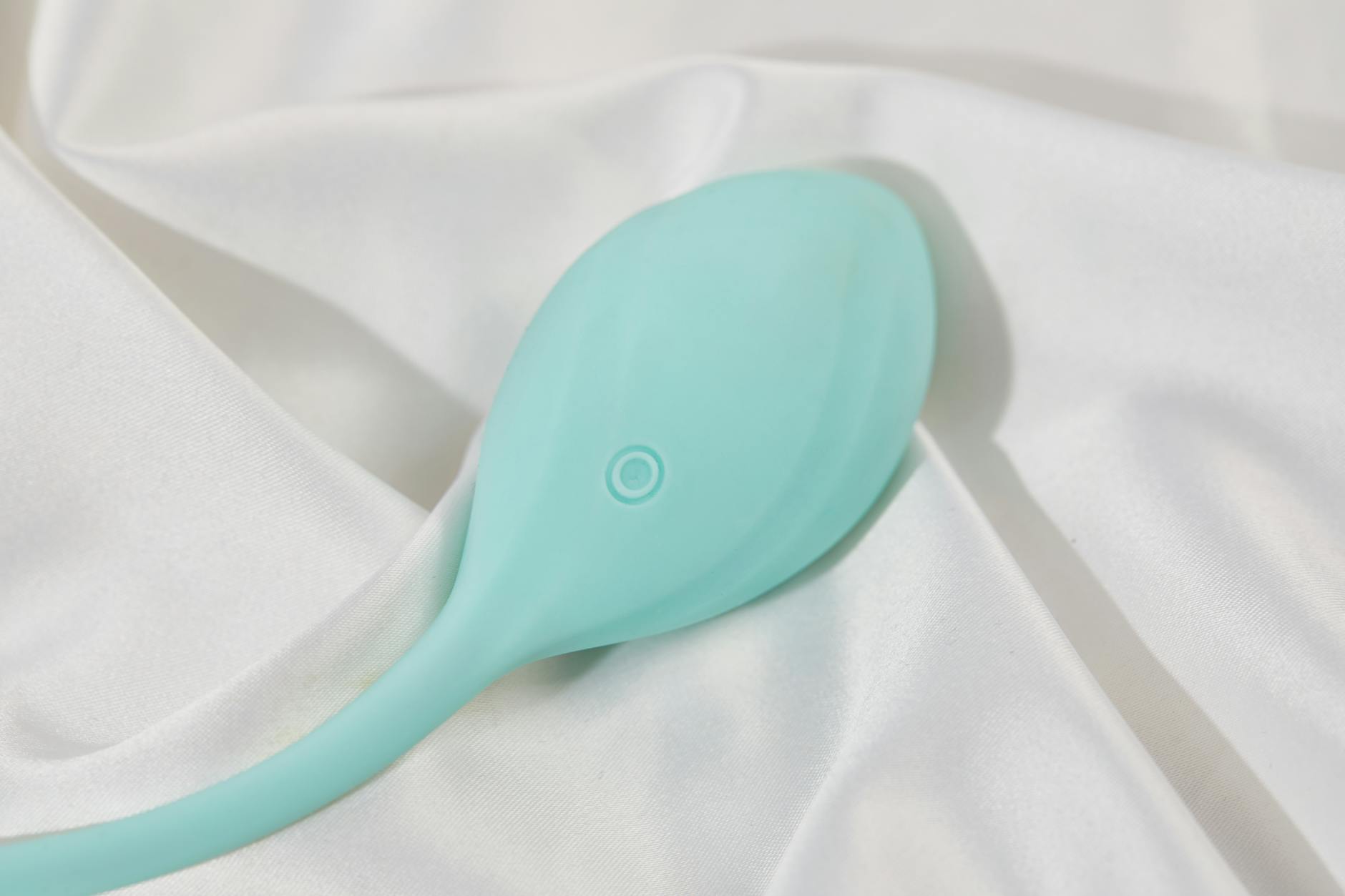
Photo by IFONNX Toys on Pexels
Sensitivity doesn't mean you're broken
One more thing because I hear this constantly: if you prefer lower intensity settings, that doesn't mean you're less sexual or less responsive. It means your nervous system reads sensation acutely. That's actually an advantage. You likely experience pleasure more vividly. You just need the toy (or partner) to meet you at that calibration.
The world talks like intensity is always better. More is always hotter. That's marketing, not biology. Some of the most profound orgasms I've witnessed came from sustained, gentle stimulation, not settings 5 and 6. There's no wrong number.
What matters is matching the intensity to your body's actual state, and being willing to reassess every few weeks because your body changes. That's not failing at pleasure. That's mastering it.
FAQ: Your intensity questions answered
Can using high intensity settings desensitize my clitoris over time?
Not permanently. But overuse of high settings without adequate rest can create temporary numbness (usually 24-48 hours). Your clitoris has a finite number of nerve endings, and pushing them hard repeatedly tires them out briefly. The fix is simple: take a day or two off, and scale back to settings 2-3. Sensitivity rebounds quickly. Think of it like muscle soreness. The muscle didn't break. It just needs rest.
Why does my sensitivity change during my cycle if I'm on birth control?
Birth control flattens the extreme peaks and valleys, but it doesn't eliminate hormonal shifts. Your body still responds to the hormone doses in your pill or patch, which means your clitoris still experiences some variation. It's just less dramatic than off-hormonal cycles. The rhythm is real, even if it's quieter.
Is it normal to need different settings with different partners or scenarios?
Completely normal. Your nervous system state changes based on context. Solo session with music and full privacy? You might need settings 3-4 because you're fully relaxed. In a new partner's apartment with uncertainty in the air? You might need 5-6 because your nervous system is partially braced. Neither is wrong. Your body is just responding to the actual conditions.
What if high intensity feels numb instead of good?
That usually means one of two things. Either your clitoris needs more arousal time before you introduce the intensity (try 20 minutes of other touch first), or your nervous system is mildly activated (stressed, anxious, distracted). Go lower, go slower, invest in the foreplay. Sometimes the toy isn't the problem. The setup is.
Can I use higher intensity if my clitoral tissue is sensitive or thin?
Sensitive tissue actually benefits more from lower intensity, ironically. The whole appeal of a lemon clitoral vibrator like the Lem is that air-pulse suction distributes stimulation rather than concentrating force like traditional vibrators. Lower settings hit that sweet spot: full sensation without mechanical pressure. If your tissue is delicate, you're probably in the 1-3 range. That's enough. You're not missing anything by staying there.
How do I know if sensitivity changes are medical vs. normal variation?
Normal variation happens over days or weeks and bounces back. You notice it tied to your cycle, stress, or medication changes. Medical sensitivity loss is sudden, doesn't respond to arousal time or lower settings, or comes with pain. That warrants a conversation with a gynecologist, especially if it's paired with other symptoms. But most intensity shifts are just your body responding to real conditions.
The bottom line
Your clitoral sensitivity is not a fixed number. It's a dynamic response to your hormones, arousal, stress, health, and medication. The best lemon vibrator in the world only works if you match its intensity to where your body actually is, not where you think it should be.
Start low. Take time. Notice what changes. Adjust. That's not fiddling. That's honoring your body's real needs. And that's how lemon vibrators become genuinely transformative instead of just something you bought once and forgot about.
If you're still sorting through what intensity feels right, or if your sensitivity shifts feel disconnected from any obvious cause, let's talk through it. Reach out at /contact.