Let's talk about the elephant in the room
Long separation rewires couples in ways nobody warns you about. You forget how to touch each other. Desire doesn't sync. The body feels unfamiliar. Even when you're thrilled to be together again, the actual mechanics of physical intimacy can feel awkward, pressured, or disconnected. That's not a failure. That's a normal response to an abnormal gap.
I've worked with reunited couples for years. Some are military families. Some navigated long-distance relationships. Some came back together after health crises, caregiving demands, or life transitions that required physical distance. The script is almost always the same: excitement fades into anxiety, and neither partner wants to admit they're not sure how to start again.
Here's the thing: a clitoral vibrator like the Lem doesn't fix the emotional gap. But it does something almost as useful. It removes the performance pressure that makes reconnection harder. It gives your body permission to feel good without negotiating every sensation. And it rebuilds trust in pleasure itself when that trust has gone dormant.
Why separation messes with physical desire more than you'd think
Time apart doesn't just pause desire. It reshapes it. Here's what changes:
Your body forgets its own responses. Three months without sexual touch and your nervous system recalibrates. Arousal takes longer. Orgasms feel different. Touch sensitivity shifts. This isn't psychological avoidance. It's neuroplasticity. Your body adapts to the absence.
Anxiety fills the gap. When you haven't had sex in months, the first time back carries weight. Will you still want each other? Will your body remember? Will it be awkward? That mental load suppresses arousal on its own. Cortisol doesn't play well with desire hormones.
Partner desire rarely syncs on the first try. One person is ready to reconnect physically. The other needs more time to rebuild emotional safety. This mismatch is predictable and solvable, but only if you're not trying to negotiate it in the moment while also trying to have sex.
Touch feels unfamiliar. You've been touched by other people (or not touched at all). You've acclimated to a different rhythm of physical contact. The first kiss or first time your partner touches you skin-to-skin can trigger surprise or even low-key rejection sensitivity. That's a trauma response, not a relationship failure.
How a lemon vibrator creates a bridge back to your body
The genius of a clitoral vibrator during reunion is that it bypasses three of those barriers at once.
First, it removes the performance expectation. When you're using a vibrator together, both partners know this isn't about his arousal or her orgasm alone. It's about sensation and reconnection. The pressure to perform dissolves. Immediately.
Second, it reintroduces your body to pleasure without requiring your partner to problem-solve your arousal. If you're struggling to get turned on, a lem vibrator does the work. You're not asking your partner to "fix" you. You're both collaborating on rebuilding what was lost.
Third, it slows the process down intentionally. A vibrator session isn't a race to orgasm. It's 20 or 30 minutes of sustained attention on sensation. That's scaffolding for emotional reconnection. You're learning your partner's touch again while you're also rebuilding your own arousal capacity.
The practical sequence that works
Start separate, then integrate. In your first sessions after reunion, use the lemon vibrator on your own, with your partner present and touching you. Not penetrative. Just hands, foreheads, kissing your shoulders. You're relearning comfort with your partner's nearness while your nervous system is focused on pleasure. This is not selfish. This is rebuilding trust.
Use it during foreplay next. Once solo sessions feel natural, bring the vibrator into partnered foreplay. Your partner holds it sometimes. You guide where it goes. This builds collaboration and removes the script of "he does this, I do that." You're improvising together.
Keep intensity low on the first few sessions. After separation, your clitoris is literally less sensitized to touch. High intensity will feel too sharp. Start on pattern 1 or 2 on the Lem and work up. You'll know when your body is ready for more.
Talk about the weird stuff that comes up. Reunion is emotional. You might cry during sex. You might feel triggered by a particular touch. You might realize your body has changed or your preferences have shifted. Name it. Pause. Breathe. Then decide if you want to continue. This isn't failing at sex. This is succeeding at reconnection.
The emotional work that the vibrator won't do (but makes possible)
Here's what I need you to understand: a lemon clitoral vibrator is a tool for physical reconnection. It is not therapy for the emotional gap. If you separated because of betrayal, if you need to rebuild trust, if resentment is still sitting in the room, the vibrator will highlight that, not heal it.
Before you rely on any sex toy for reunion, check in on these questions together. Out loud. Not during sex.
Why were you separated? Was it circumstantial (military deployment, job relocation) or relational (you needed space, someone acted in ways that broke trust)? The reason matters for how you rebuild.
What did the separation clarify about what you want? Sometimes absence shows you that you miss someone. Sometimes it shows you that the relationship isn't working. Both answers are valid. Don't skip this conversation.
Are you both actually ready to reconnect physically? Reunion pressure is real. One partner sometimes pushes for physical connection before the other is emotionally safe. A vibrator won't solve that. If it's happening in your relationship, get a couples therapist. Seriously.
What does touch mean now that it didn't before? After separation, sex can feel loaded with make-up energy or desperation or grief. Those feelings are real and worth naming. "I want to feel close again" is different from "I want to prove nothing has changed." The second one will stall you.
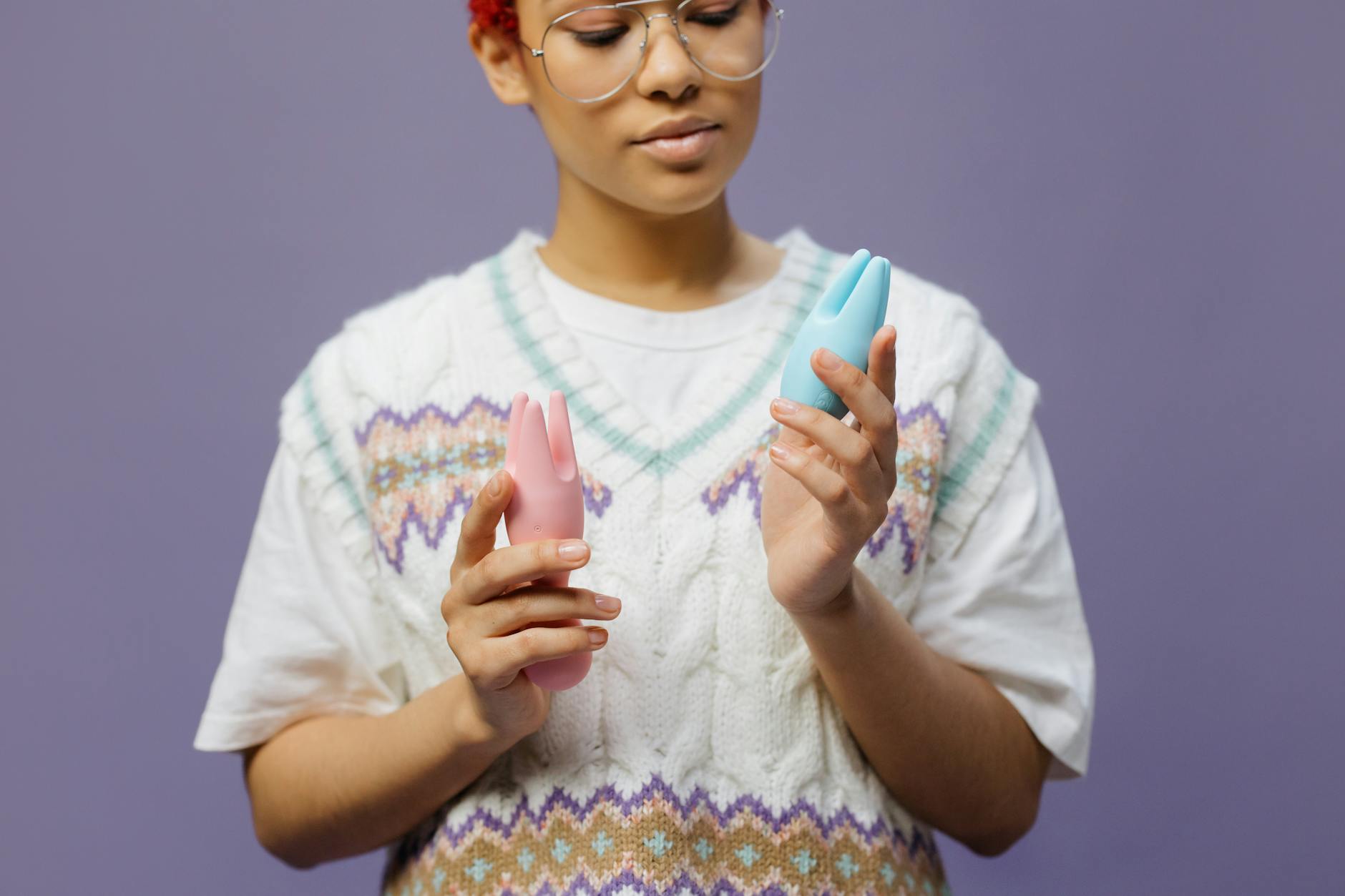
Photo by cottonbro studio on Pexels
What happens when one partner is ready before the other
This is the most common reunion scenario I see. One person has been fantasizing about reconnection. The other is still in anxiety mode. Mismatched desire after separation is not a sign of incompatibility. It's just biology and nervous systems operating on different timelines.
The fix is unsexy but necessary. Slow down. Use the vibrator without penetration for a few weeks. Give the anxious partner time to rebuild felt safety. Use the vibrator for your own pleasure, with your partner nearby, until touch feels normal again. Build arousal slowly.
If you're the person who's ready and your partner isn't, how to use a lemon vibrator when partners have mismatched desire levels has deeper strategies for navigating that dynamic.
The specific role of suction stimulation during reunion
Separated couples sometimes describe clitoral numbness or difficulty reaching orgasm. This happens partly because arousal capacity fades without regular sexual activity. Suction vibrators like the Lem are especially helpful here because they stimulate without the friction that can feel too intense or triggering after a gap.
The Lem's suction pattern also creates a different sensation than traditional vibration. Some couples describe it as more intimate, more gradual in building arousal. If your nervous system has been in fight-or-flight (which it has after separation anxiety), suction's gentler stimulation helps you downshift into parasympathetic arousal more naturally than high-frequency vibration.
When to bring a therapist into the reunion process
If you're struggling with rebuilding after a negative sexual experience, reconnection gets harder. So does reunion if the separation was caused by infidelity, trauma, or broken agreements.
Sex therapy or couples counseling isn't a last resort. It's a bridge when the emotional work is too heavy for alone time plus a vibrator. A good therapist can help you navigate desire mismatches, rebuild trust, and use physical intimacy as a tool for reconnection rather than a proving ground.
A closing thought on time and body memory
Your body remembers pleasure. Not consciously, but somatically. A vibrator session after months of absence might feel awkward at first. Your arousal might be slow. But within weeks, muscle memory kicks in. Your nervous system begins to trust pleasure again. Your partner's touch stops feeling foreign.
Reunion through the body is not instant. It's methodical. It's patient. And it works better when you're not expecting fireworks on night one. You're rebuilding. That takes permission, intention, and the willingness to let sensation lead for a while.
People also ask
How long does it usually take to rebuild physical intimacy after a long separation? Most couples notice significant shifts within 4 to 8 weeks of consistent, low-pressure physical contact. The first two weeks are often the most awkward. By week three, touch starts to feel normal again. Full reconnection (desire matching, comfort with vulnerability, the ability to orgasm easily) often takes 2 to 3 months. You're rewiring your nervous system, not just having sex.
Is it normal to feel triggered or emotional during sex after reunion? Absolutely. Your body carries memory of the separation. Touch can bring up grief, relief, vulnerability, or even flashbacks if the separation was traumatic. If you're crying during sex or feeling panicked, pause. That's your nervous system processing. It's not a sign to stop reconnecting. It's a sign to go slower and maybe add professional support.
Can a vibrator help if my partner is uncomfortable with reunion sex? Yes, but only indirectly. A vibrator removes some performance pressure, which can help an anxious partner relax. But if your partner is actively resistant to physical reconnection, the issue is emotional safety, not sensation. A therapist can help you both rebuild trust before you rely on tools.
What if one of us wants penetration but the other isn't ready? This is common after separation. The solution is patience and a clear timeline. Start with external stimulation only (vibrator, hands, oral) for 2 to 4 weeks. Let your partner's nervous system recalibrate. Then check in. Some partners will be ready. Some will need more time. Honor that without resentment. A vibrator like the Lem makes external pleasure feel complete, which takes pressure off moving to penetration before both people are ready.
Should we use a vibrator together or separately at first? Start separately, with your partner present and touching you. This builds comfort with pleasure while you're also experiencing touch from them. After 2 to 3 weeks, bring the vibrator into partnered foreplay. The progression matters because it rebuilds arousal capacity and trust at the same pace.
Is it okay to orgasm from a vibrator during reunion sex instead of from my partner? Yes. Full stop. Your pleasure isn't a gift you're giving your partner. It's part of reconnection. If you can only orgasm with a vibrator right now, that's your nervous system being honest about what it needs. Use it. Your partner can hold it, touch you while you use it, or simply be present. Over time, as safety rebuilds, your orgasm response will likely expand.
If you're rebuilding after separation and feeling stuck, reach out. Reunion intimacy is hard enough without struggling alone.