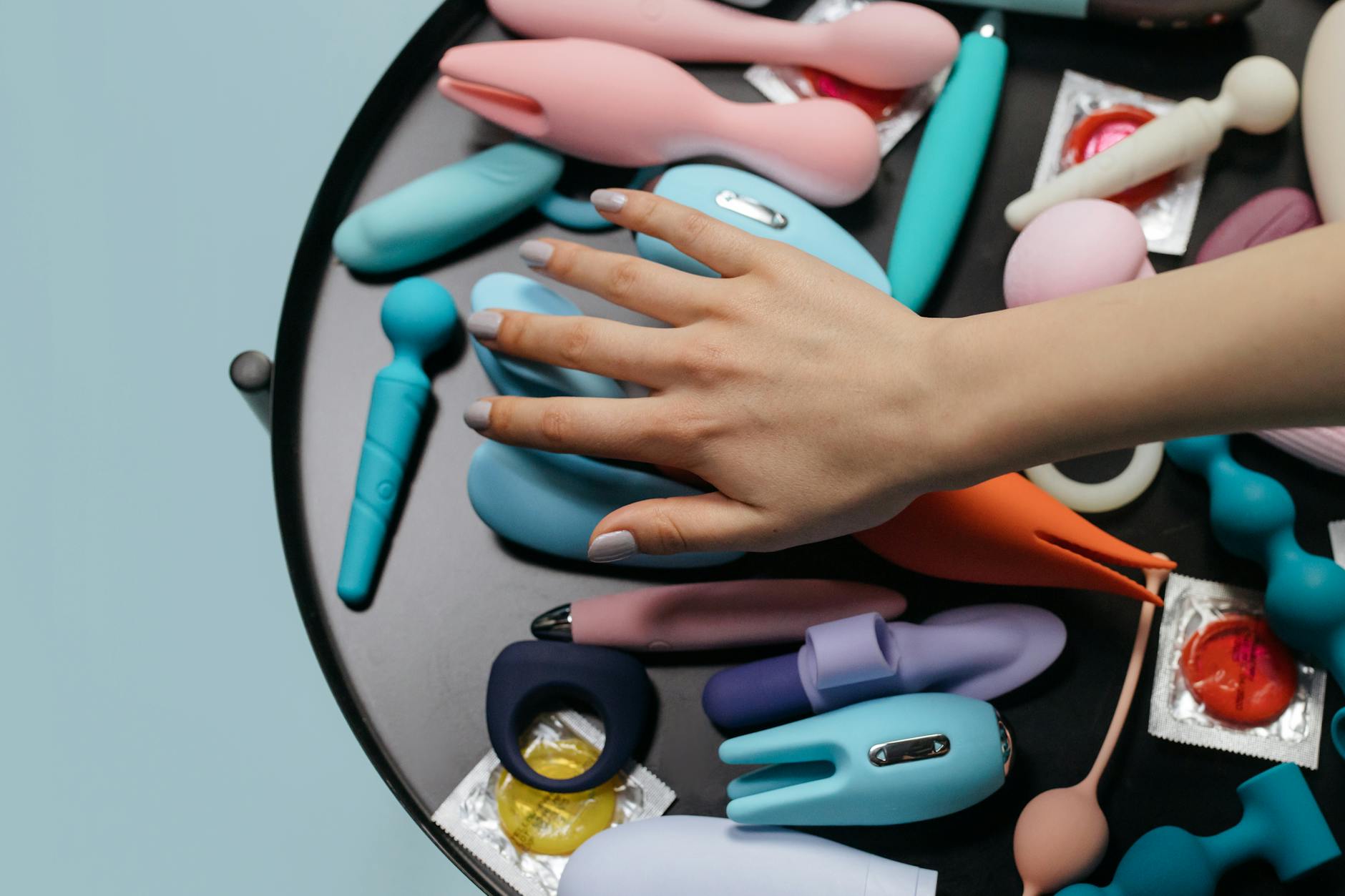
Lemon Vibrator and Anxiety: How to Enjoy Pleasure Without Performance Pressure
Let's be real. Anxiety doesn't just show up in your calendar or your email inbox. It shows up in bed, too. And when it does, it brings a spotlight and a clipboard. Suddenly you're not having pleasure, you're auditing it. You're checking: Am I doing this right? Am I taking too long? Should it feel different? Does my partner think I'm taking too long?
And then pleasure dies. Quietly. By suffocation.
I've sat with countless people in my practice who describe this exact loop. They're not broken, and they don't need to try harder. What they need is permission to stop trying so hard. That's where something shifts.
The anxiety-pleasure disconnect is neurological, not personal
When you're anxious, your nervous system is in a state of high alert. Your brain is scanning for threat. Is this safe? Am I okay? This is evolutionarily wise when a tiger is actually nearby. It's spectacularly unhelpful when you're alone with your partner or by yourself trying to feel good.
Anxiety activates your sympathetic nervous system, the one responsible for fight, flight, or freeze. Pleasure, by contrast, requires parasympathetic activation. That's the rest-and-digest mode. You cannot be in both states at once. Your body will not permit it.
So you have two choices. You can white-knuckle your way through, which feels like pushing a boulder uphill while someone's timing you. Or you can shift the nervous system first, which makes pleasure accessible again.
This is why the pressure to perform is so destructive. Telling someone anxious to "just relax" or "stop thinking so much" is like telling someone with low blood pressure to "have more energy." Neurologically incoherent.
How air-pulse vibrators change the equation
Here's what makes lemon vibrators different from traditional buzzing vibrators when anxiety is in the picture. The suction and pulse pattern creates a different kind of stimulation. It's rhythmic, predictable, and it requires less mental effort to respond to.
With traditional vibrators, your brain has to work to stay present. The sensation can feel diffuse or require active engagement to sustain. With an air-pulse lemon clitoral vibrator, the sensation is so immediate and focused that your mind has fewer places to wander. It's almost impossible to stay in your head when the pattern is doing the work.
That's not magic. That's neurobiology. The specificity of the sensation anchors you to your body instead of letting you float away into performance-monitoring mode.
The mind shift that actually matters
Tool choice is about 30 percent of this. The other 70 percent is what you're telling yourself while you're using it.
If you're using a lemon vibrator with the same internal pressure you've always had, it just becomes a fancier way to disappoint yourself. That's not fair to the tool or to you.
Here's what I ask my clients to do instead. Before you start, make one simple declaration: "I'm not trying to come. I'm here to feel."
The shift from outcome to sensation is microscopic linguistically and massive neurologically. Coming is a destination. Feeling is a process. One creates pressure. One creates space.
When you're outcome-focused, you're checking boxes. Is it happening? How long has it been? Am I close? That's sympathetic activation. When you're sensation-focused, you're noticing: What does this feel like right now? Is it gentle or intense? Do I want to shift the pattern? That's parasympathetic. Your body can actually relax.
I recommend starting with pattern 1 or 2 on your lemon vibrator and spending at least five minutes just noticing sensation without trying to build toward anything. Let your body surprise you instead of performing for you.
Anxiety often masks as boredom or disconnection
Here's something people don't talk about enough. Anxiety sometimes disguises itself. It shows up as "I'm just not that into this anymore" or "Nothing works for me" or "I'm broken." But when I ask deeper questions, the pattern is usually anxiety dressed in different clothes.
Someone will say "I don't feel anything with vibrators anymore," and when we dig in, it turns out they're anxious about whether they're doing it "right." They're worried they're taking too long or that something is wrong with them. And that anxiety has completely numbed their ability to sense anything.
The tool didn't stop working. The nervous system did.
A lemon clitoral vibrator can help interrupt that pattern because it's so stimulating and specific that it's harder to layer anxiety on top. But only if you're also willing to question the narrative you're running in the background.
Partner anxiety requires a different conversation
If your anxiety is coming from your relationship, that's a different layer. If you're worried about how you look, whether your partner is enjoying this, how long you're taking, whether they're judging you—those are relational anxieties. A vibrator can't fix those.
What helps is honesty. Saying out loud: "My brain gets in the way during sex, and it's not about you or how I feel about you. I'm working on it." That simple declaration often dissolves half the tension because your partner isn't guessing anymore.
If you're partnered, you might also consider exploring alone first. Solo pleasure is anxiety-free laboratory time. No one's watching, no one's waiting, no one's wondering if you're okay. That's where people often discover what actually feels good versus what they think should feel good.
That knowledge transfers back into partnered time. You arrive with information instead of questions.
Building a sustainable pleasure practice
The lemon vibrator isn't a rescue device. It's a tool in a larger system. Here's what actually works long-term.
First, consistency matters more than intensity. Using your air-pulse vibrator twice a week with zero pressure beats white-knuckling once a month. Your nervous system learns that pleasure is a regular, safe, allowed thing.
Second, remove the stakes. No outcome goals. No time limits. No comparison to how it used to be or how you think it should be. Just sensation.
Third, notice what works. Not whether you came, but what felt good. Did pattern 3 feel better than pattern 1? Did you prefer it at the start or after five minutes? Did you like a specific pressure? You're building data, not judgment.
Fourth, extend the permission beyond the tool. If you can give yourself permission to feel without performing when you're alone with a lemon vibrator, that permission gets bigger and travels into the rest of your life.
The lem vibrator or any air-pulse clitoral vibrator is surprisingly effective at this because it removes some of the pressure to "do it right." The sensation is so pronounced that you can't fake it. You either feel it or you don't. And when you stop trying and start feeling, everything changes.
When anxiety needs more than a tool
If anxiety is significantly interfering with your ability to experience pleasure, or if it's threading through your entire life, talk to a therapist. I'm not saying this because there's something wrong with you. I'm saying it because a trained professional can help you understand what your nervous system is actually protecting you from. Often anxiety isn't random. It's a signal.
A few therapy sessions with someone trained in somatic work or trauma-informed practice can shift things that no vibrator can touch. And then, when you come back to your lemon vibrator or your air-pulse clitoral toy, the experience is different because you're different.
Pleasure is your birthright, not something you have to earn. It doesn't require perfect conditions or perfect performance. You're allowed to feel good in your own body. That's the starting point. Everything else builds from there.
People also ask
Can anxiety actually block physical sensation from a lemon vibrator?
Yes. Anxiety is a full-body experience. It tightens muscles, redirects blood flow, and activates your nervous system in a way that makes subtle or even obvious sensation harder to access. That's why some people feel nothing even with stimulation that should be working. The tool isn't broken. The nervous system is in protection mode.
Is it normal to prefer using a lemon sexual toy alone rather than with a partner when you have anxiety?
Completely normal. Partnered sex adds a layer of social evaluation to an already anxiety-prone experience. Solo time is your baseline. You get to explore without an audience, real or imagined. Many people find that discovering what they actually like alone transforms partnered experiences because they arrive with information instead of insecurity.
How long does it take for a lemon clitoral vibrator to help with performance anxiety?
It depends on the person and what you mean by "help." Some people feel the shift in their first session just from the difference in sensation. Others take a few weeks of consistent practice to notice their brain getting quieter. What's important is that you're not using the vibrator as another way to perform. If you're checking off a box—"Did I overcome my anxiety yet?"—you've missed the point. The goal is to practice sensation without pressure.
Should I tell my partner I'm using a lemon vibrator to manage anxiety?
If you're in a committed relationship, yes. Not because you need permission, but because honesty dissolves a lot of tension. You might say something like, "I'm working on enjoying this more by myself first so I can show up differently with you." Most partners appreciate that kind of clarity. What they don't appreciate is mystery and avoidance, which anxiety often creates.
Can a lemon sucker vibrator actually reduce my anxiety over time?
The vibrator can interrupt the anxiety pattern in the moment. That's real. Over time, if you use it as a place to practice not performing, that permission spreads into other parts of your life. Your nervous system learns that some contexts are actually safe. That's where real change lives. Not in the tool. In the practice of trusting your body.
What's the difference between anxiety and low libido?
Anxiety is usually about the experience itself. You're worried, monitoring, checking. Low libido is often about desire being absent. Sometimes they look the same because anxiety can suppress desire. But they require different interventions. If you're anxious, the work is nervous system regulation. If desire is genuinely absent, that's a different conversation, possibly involving hormone levels, relationship dynamics, or stress load. A therapist or doctor can help sort that.
The bottom line
Anxiety and pleasure are almost biological opposites. Your lemon vibrator is a tool that makes pleasure specific and immediate enough that anxiety has less real estate to occupy. But the real shift happens when you stop performing and start feeling. That's not about the tool. That's about you giving yourself permission to be a body that feels good, not a body that's being watched. And honestly? That permission is the most powerful thing you can bring to any form of pleasure.
If you're struggling with anxiety in other areas of your life or in your relationships, reaching out to talk to someone trained in this work can help. Your nervous system wants to trust again. Sometimes it just needs a little support to get there.