
Let's name what's actually happening
Here's the thing about anxiety during sex: it's not a character flaw, and it's not rare. Somewhere between 25 and 50% of people with vulvas report performance anxiety, racing thoughts, or panic creeping in during intimacy. Your nervous system isn't broken. It's just doing its job too well.
Anxiety during sex often looks like this. You're aroused, things are going well, and then suddenly your brain hijacks the experience. You notice your heart racing, maybe feel lightheaded. You start monitoring yourself: "Am I doing this right? Why am I not more into this? What if they notice I'm anxious?" And boom—arousal tanks, pleasure vanishes, panic sets in. It's a vicious loop.
Why does this happen? Usually it's a combination of things: past experiences, learned patterns around performance, or even the expectation that intimacy "should" feel effortless. The good news is that anxiety during sex is genuinely treatable, and the right tools—including a lemon clitoral vibrator—can actually help you stay present instead of spinning out.
How anxiety hijacks arousal (and why your lemon vibrator helps)
When you're anxious, your sympathetic nervous system (the fight-flight-freeze response) activates. Blood diverts away from your genitals and toward your limbs. Your clitoris becomes less responsive. Your vagina may tighten. You literally cannot relax into pleasure when you're in survival mode.
A lemon vibrator does something specific that helps interrupt this cycle: it demands focus. Not in a forced way, but in a practical one. The sensation is strong enough that it pulls your attention away from anxious thoughts and back into your body. That shift from "Am I doing this right?" to "I feel that" is neurologically powerful. You're retraining your brain to stay tethered to physical sensation instead of spiraling.
The air-suction design of a clitoral vibrator like the Lem is particularly useful for anxiety because it provides consistent, non-numbing stimulation. You don't have to think about how to use it correctly. You don't have to perform. You just apply it, and the sensation is so immediate and clear that distraction becomes almost impossible.
The grounding framework before you even start
If anxiety during intimacy is a pattern for you, the work begins before clothes come off. Here's what I recommend to my clients.
Name the anxiety pattern. Sit down with yourself or your partner (separately first, if talking feels too loaded) and identify the trigger. Is it a particular position? A specific thought? Being watched? Performance expectations? The more specific, the less power it holds.
Set a pause agreement with yourself and your partner. You're allowed to pause, reset, and start again without judgment or abandonment. Many people find that knowing they can pause actually makes pausing unnecessary. The permission itself is therapeutic.
Ground before arousal starts. Spend 5 minutes doing body-scan breathing. Start at your toes and move upward, noticing temperature, texture, weight. Name three things you can see, three you can feel, two you can hear. This shifts your nervous system toward the parasympathetic (relaxation) side before vulnerability enters.
Create a sensory anchor. Pick a specific touch, scent, or word that signals safety to you. When anxiety starts creeping in during sex, you can signal this anchor to your partner or to yourself as a reset button.
How to use your lemon vibrator as an anxiety management tool
Start with lower intensities, even if you normally prefer higher ones. Anxiety makes your nervous system hypersensitive, which can make typical stimulation feel overwhelming. Begin at pattern 1 or 2 on your Lem vibrator. You're not "weak" for needing gentler input when anxious. Your system needs permission to calm down before it can build arousal.
Use your vibrator earlier in the session than you normally would. Don't wait until you're "supposed" to be fully aroused. Introducing it 10 or 15 minutes into partnered play (or early in solo time) gives you a familiar, positive sensation to anchor into. It becomes your reset button, not a last-resort panic measure.
If you're with a partner, let them know: "I want to use my lemon vibrator when I start feeling anxious, and that's not a sign anything's wrong. It helps me stay present." Remove the shame from the tool. It's not a backup plan. It's part of your intimacy toolkit.
Practice solo first if you're new to this. Spend time with your clitoral vibrator when you're calm and have zero pressure. Learn how it feels at each intensity. Learn what pattern works when. That familiarity becomes a safety net when anxiety rises. You're not discovering a new tool mid-panic. You're returning to something you already know.
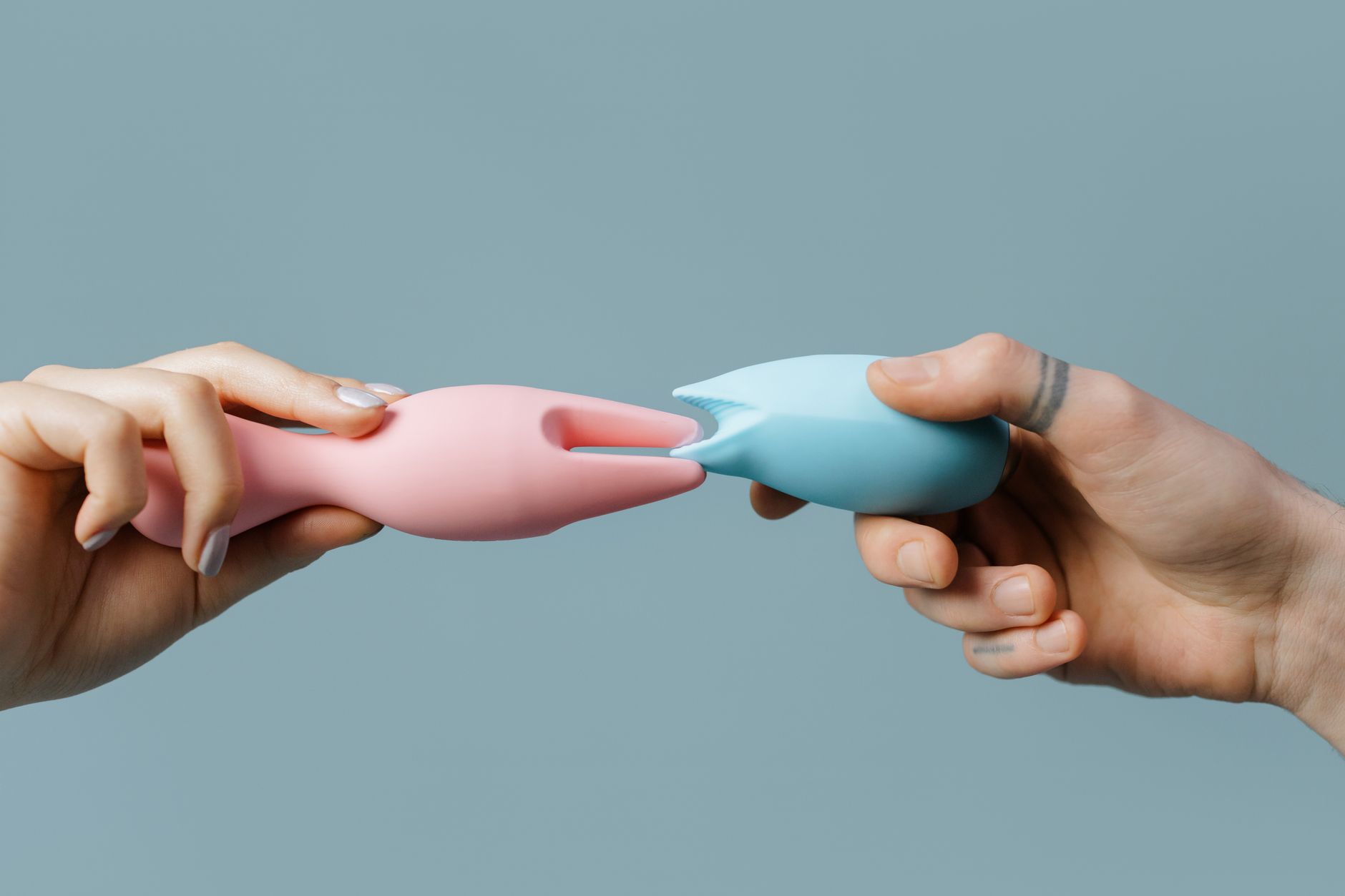
Photo by cottonbro studio on Pexels
The pattern that matters: what to notice during intimacy
As you practice using your lemon vibrator during moments of anxiety, pay attention to a few things. Does the anxiety spike, then gradually lower as stimulation continues? That's your window. You've found the point where your nervous system can calm down. Does the anxiety stay high no matter what? That might signal you need a longer pause or a different approach that session.
Notice also what helps you stay present. Is it the physical sensation? The knowledge that your partner isn't rushing you? The rhythm of breathing? The vibration pattern itself? Anxiety during sex is deeply individual, and your lemon clitoral vibrator is one tool in a larger toolkit. The more you understand your own pattern, the faster you can interrupt it.
Many of my clients report that after a few weeks of consistent practice, the anxiety itself becomes predictable and manageable. They're not "cured." They've just learned that anxiety doesn't have to derail intimacy. It's a signal their nervous system needs support, and they know exactly how to provide it.
When to talk to someone else
If anxiety during sex is new and intense, or if it's paired with trauma responses (freezing, dissociation, flashbacks), working with a therapist trained in somatic therapy or trauma-informed sex therapy is worth it. A lemon vibrator is a tool, not a treatment. It works beautifully as part of a broader approach, but it's not a substitute for professional support if deeper stuff is happening.
If anxiety is tied to relationship dynamics (feeling unsafe, not trusting your partner, unresolved conflict), that's a conversation worth having with your partner or a couples therapist. Sometimes the vibrator helps. Sometimes you first need to build a foundation of safety and communication.
But if this is performance anxiety, past conditioning, or learned patterns around pleasure, you're in the right place. Your nervous system can be retrained. Your lemon vibrator can help. And you absolutely deserve intimacy that feels good, not terrifying.
People also ask
Can a lemon vibrator actually calm down anxiety, or is it a distraction?
Both. The physical sensation pulls your attention away from anxious thoughts—that's the distraction part. But it also triggers a physiological shift. Focused stimulation and pleasure activate the parasympathetic nervous system, which is the "rest and digest" mode. Your heart rate actually slows, blood returns to your genitals, and your muscles relax. That's not a trick. That's your nervous system doing what it's supposed to do when given the right input.
What if I feel panic rising even with the vibrator?
Stop. Not because something's wrong, but because continuing won't help. Take a 5-minute pause. Do grounding breathing. Maybe use your sensory anchor. Then check in with yourself: do you want to resume, or do you want to stop altogether? Pushing through panic reinforces the pattern that intimacy is scary. Pausing and resetting teaches your nervous system that you're safe and in control.
Should I tell my partner about the anxiety, or is it better to just manage it quietly?
Tell them. I know that feels vulnerable. But partners often don't realize you're struggling, and they may interpret anxiety responses as lack of attraction or interest. When they know what's happening, they can help. They can slow down, check in, use your sensory anchor. They become part of the solution instead of an audience to your panic.
Does the lemon vibrator work the same way for anxiety as for other sensitivity issues?
Yes and no. The tool is the same, but the framework is different. With desensitization or sensation rebuilding, you're training your nervous system to respond to stimulation. With anxiety, you're calming an overactive nervous system so arousal can happen. The lemon vibrator supports both, but the pacing and intensity will differ. Start lower and slower with anxiety.
How long does it take to feel less anxious during sex if I use these techniques?
Most of my clients notice a shift within 2 to 4 weeks of consistent practice. The anxiety doesn't vanish. But it becomes manageable, predictable, and less controlling. The key is consistency and self-compassion. Shame amplifies anxiety. Patience with yourself shrinks it.
Is there a best pattern on the lemon vibrator for managing anxiety during intimacy?
Generally, slower, rhythmic patterns work better than fast or chaotic ones for anxiety. Rhythm is calming to your nervous system. If your lemon vibrator has a steady pulse or wave pattern, start there. Avoid the fastest settings when you're already activated. You're trying to downregulate, not amp up further.
The real shift
Anxiety during sex isn't a flaw you have to hide. It's a nervous system response you can work with. Your lemon vibrator isn't a band-aid. It's a tool that helps you stay tethered to pleasure instead of disappearing into panic. Over time, you'll notice the anxiety takes up less space. The pleasure expands. And intimacy stops feeling like a test you might fail and starts feeling like something you actually deserve.
If you're ready to explore these techniques, start with solo practice first. Get comfortable with your clitoral vibrator when there's zero pressure. Learn your body's language. Then bring that knowledge into partnered intimacy. The difference is real, and you're already taking the right step by reading this.
Have questions about building intimacy in the face of anxiety? Reach out to Buy Lem Sucker. We're here.