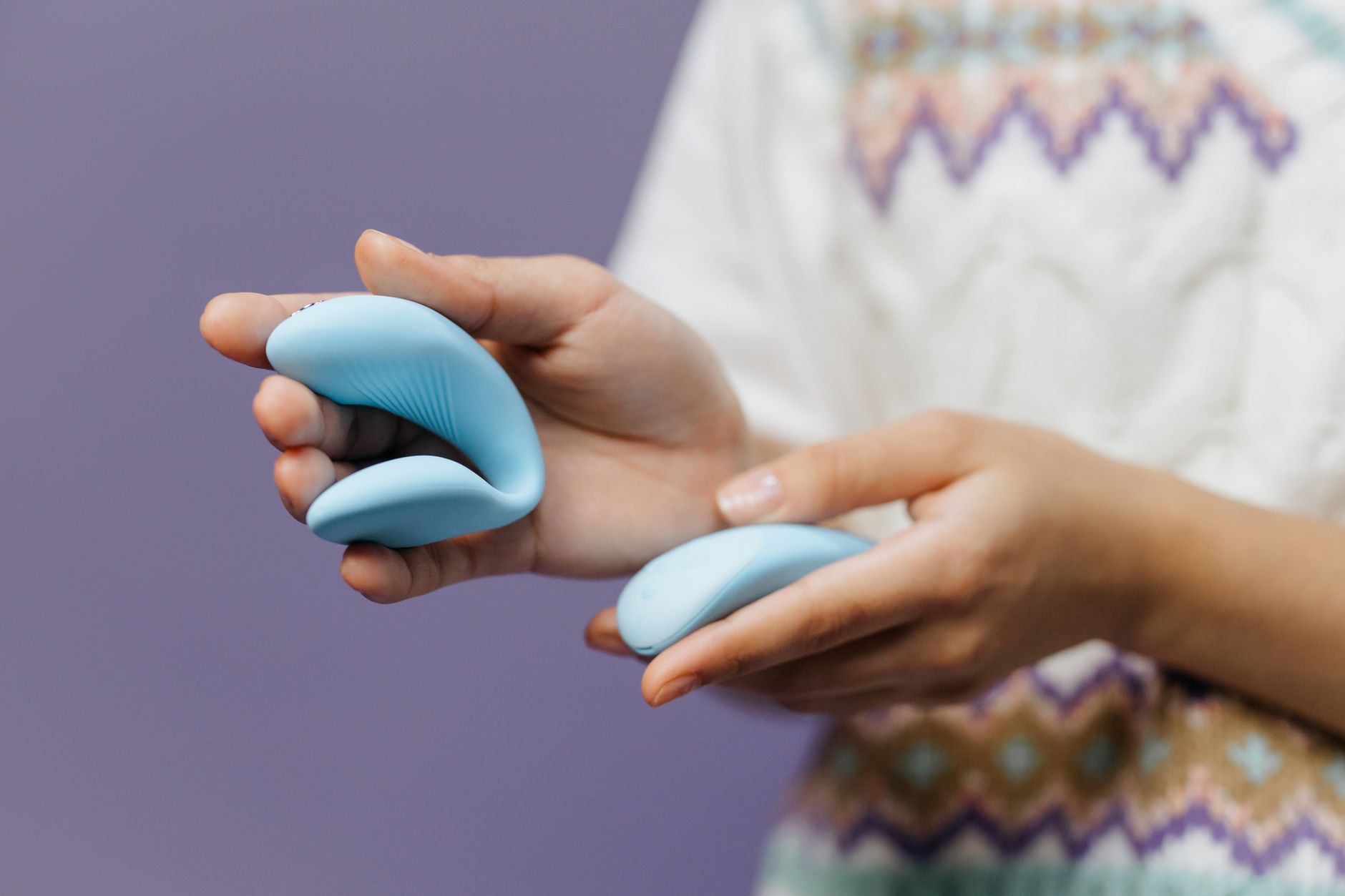
Here's the thing about orgasm strength
It's not fixed. Your capacity for pleasure actually grows with attention, the same way a muscle responds to training. Most people think orgasms are either "good" or "weak" depending on the day, hormones, or luck. That's half true. The other half is that you can actively build intensity over time by training your nervous system and understanding how your body responds.
I work with people across all ages and bodies who want to deepen their orgasmic experience. The pattern I see most often: they're using a lemon clitoral vibrator inconsistently, or they're using it the same way every time. Small shifts in approach, timing, and intention create measurable changes in intensity and satisfaction within 4 to 8 weeks.
Why orgasms plateau in the first place
Your body adapts. That's actually excellent for survival and terrible for sustained pleasure. The same vibration pattern, the same tension level, the same mental state every time trains your nervous system to expect and deliver the same response. You're not broken. Your body is just efficient.
There's also the matter of sensitivity. The clitoral tissue has roughly 8,000 nerve endings, but they don't all activate at the same threshold. Surface stimulation reaches some. Deeper suction pressure reaches others. Varied rhythm activates different patterns of nerve firing. If you use only one pattern, you're lighting up the same neural pathways every time. More variety means more of your available nerve endings come into play, which creates objectively stronger contractions.
Then there's mental contribution, which is roughly 60 percent of what makes an orgasm feel intense. Fantasy, anticipation, focus, and novelty all amplify the physical response. Using a lemon vibrator the same way while thinking the same thoughts delivers diminishing returns.
Start with baseline mapping
Before you build anything, you need to understand your current setup. Set aside 20 to 30 minutes with no distractions. Use your lemon vibrator at its lowest setting and pay attention to what you notice.
What patterns feel the most pleasurable right now. This isn't about achieving orgasm. It's about mapping which vibration rhythms and speeds create the most sensation. The Lem offers multiple patterns. Try each one at low intensity and note which one creates the deepest response.
How long arousal takes to build. Some people need five minutes to feel engaged. Others need 15 or 20. Neither is wrong. Knowing your baseline helps you plan for longer sessions later.
Where on the clitoral area you're most sensitive. Direct contact on the glans is intense for some people and overwhelming for others. Many find the side or hooded area creates better sensation. Experiment. This information matters for the progressive work ahead.
Your current orgasm timeline. How long does it typically take from arousal to orgasm at your baseline setting. Write it down. You're going to change this intentionally.
Week one through two: Extend the timeline
This sounds counterintuitive, but shorter sessions create weaker orgasms because your nervous system hasn't had time to build sufficient tension. The goal here is deliberately extending your time to orgasm by 50 percent from your baseline.
If you typically orgasm in eight minutes, spend 12 minutes this week. If your normal is 15 minutes, aim for 22 or 23.
How: start at a lower intensity than you usually would. Spend the first five to seven minutes building arousal with minimal contact. Your goal is presence, not speed. Then gradually increase intensity over the remaining time. Use the same pattern you identified as your favorite, but think of it as a ramp rather than a plateau.
Most people report that extending the timeline feels awkward at first. You might feel the impulse to finish. Don't. Notice what happens when you slow down. Your body will actually create more lubrication, your clitoris will become more engorged, and your nervous system will build to a higher baseline of activation. Orgasms after a longer buildup are measurably more intense.
Week three through four: Introduce pattern variation
Now that you're comfortable with a longer session, add switching. Use your favorite pattern for four minutes. Then switch to a different pattern for another four. Back to the first. This breaks your nervous system's adaptation cycle.
The shift doesn't have to be dramatic. If you love pattern one, pattern two might feel strange at first. That strangeness is exactly what you want. New sensations activate different nerve pathways. After four minutes on a new pattern, your nervous system recalibrates and becomes more responsive to the original one when you return.
During this phase, some people notice their orgasms become less predictable or take longer. That's normal and temporary. Your body is learning flexibility. By the end of week four, most people report that their orgasms feel more intense because they involve more of their available nerve endings.
Week five through six: Layer in mental novelty
Now the physical tool stays the same, but you change what your mind is doing.
Use your lemon vibrator in a space you don't usually use it. Or at a different time of day. If you normally use it in the evening with the lights off, try morning daylight. The change in context actually changes your physiological response.
Alternatively, introduce different fantasy or focus. Some people spend these weeks exploring different scenarios or intensities of visualization. Others focus on bodily sensation tracking instead of outcome. The point isn't what you choose. The point is that novelty amplifies response.
I've worked with clients who use this two-week window to explore whether they want a partner present during this time, or whether solo exploration feels better. That shift in social context alone can intensify sensations because it changes your nervous system state.
Week seven and beyond: Combination and deepening
You now have pattern variation and timeline extension and mental novelty all available. Start combining them strategically.
A session might look like: 10 minutes building arousal with pattern one at low intensity. Three minutes on pattern two at medium intensity. Return to pattern one at higher intensity for another eight minutes. Then a brief switch to pattern three as you approach orgasm.
Or: extend sessions to 30 or 40 minutes and use the variety to create multiple peaks of arousal before the final orgasm. Many people find that this creates a longer, more complex orgasmic response.
The key phrase here is intentional variation. You're not randomly switching things. You're experimenting based on what you learned in weeks one through six about what your body responds to most strongly.
The role of pelvic floor engagement
Orgasm is fundamentally a series of involuntary muscle contractions. If your pelvic floor is weak or chronically tense, those contractions stay shallow. Strengthening your pelvic floor through kegels or pelvic floor physical therapy measurably increases orgasm intensity.
So does the reverse. Learning to relax your pelvic floor fully before stimulation allows for deeper contractions during orgasm. Many people carry tension in this area without realizing it. Spending two to three minutes before each session consciously relaxing your pelvic floor, breathing deeply, and letting your body settle changes what's possible.
Why consistent weekly sessions matter more than daily ones
There's a temptation to use your lemon vibrator every day because it feels good. Daily use doesn't build stronger orgasms. In fact, it can soften them through overuse and constant nervous system stimulation. Your body adapts quickly to frequency.
Consistent weekly sessions with intentional variation, though, create cumulative nervous system training. Three focused, varied sessions a week for six weeks will create measurably stronger orgasms than daily use without variation.
Think of it like strength training. You don't build muscle by exercising the same muscle group every single day. You build muscle through strategic stimulation with recovery time in between.
Tracking what actually changes
After week two, start writing down simple observations after each session. Not your feelings. Concrete things: duration of orgasm in seconds, intensity on a scale of one to ten, whether it felt different from last time, which patterns you used, how long you spent building arousal.
Over four to eight weeks, patterns emerge. You'll notice that certain combinations consistently produce stronger responses. You'll see that when you extend your timeline, intensity increases. You'll recognize which mental states support deeper orgasms.
That data is gold. It becomes your personal map for what works. And the act of tracking creates intention, which alone amplifies pleasure.
When to revisit your approach
After eight weeks of consistent practice, take a week off. Then start fresh, but with what you've learned. Your baseline will have shifted up. You'll want to re-explore where you are now and what new variations might deepen things further.
Pleasure isn't a destination. It's a conversation with your own body that gets richer over time. Your lemon clitoral vibrator is the tool. Your attention is the real instrument.
Questions people ask about intensifying orgasms
Can using a vibrator too much make future orgasms weaker?
Daily use without variation can dull sensation over time. Your nervous system adapts to constant stimulation. But consistent, varied sessions actually train your nervous system toward more responsive orgasms. The difference is intention. Think quality and variety over frequency.
Does my orgasm intensity matter if it doesn't feel weak to me?
There's no baseline "correct" orgasm. If you're satisfied, that's genuinely enough. But many people who explore deeper intensity report that it wasn't about need. It was about discovering more was possible. That shift alone changes the experience.
How long does it take to notice changes?
Most people notice measurable shifts after three to four weeks of consistent, varied use. By week six or eight, changes are obvious. Patience matters here. Your nervous system is learning. Learning takes time.
Should I use my lemon vibrator alone or with a partner to build intensity?
Both work. Solo exploration often builds stronger sense of what your body responds to because there's zero performance pressure. Partner exploration adds novelty and intimacy, which are also powerful. The most important factor is that you're experimenting with intention and presence, not routine.
What if I'm not comfortable exploring this much?
Start smaller. Add one variable at a time. Use your lemon sexual toy once a week instead of daily. Notice what changes. Or simply extend one session by five minutes and observe the difference. Building pleasure is personal. Move at your own pace.
Can I use these techniques with any clitoral vibrator?
Yes. Whether you're using a lemon vibrator, the Lem, or any air-suction device, the principles of timeline extension, pattern variation, and mental novelty apply. The specific tool matters less than the intentionality you bring to exploration.
The long game
Pleasure deepens. Orgasms can get stronger, more nuanced, more reliably intense. You're not trying to chase some idealized experience. You're having a conversation with your body across weeks and months, learning what it's capable of, and building capacity over time.
The lemon vibrators and suction devices that so many people use are beautifully designed for this kind of progressive exploration. They offer enough variation and intensity range to support months of deepening practice.
More importantly, you deserve to know what's available in your own body. That discovery is the real pleasure. The orgasms are just the evidence that you're paying attention.