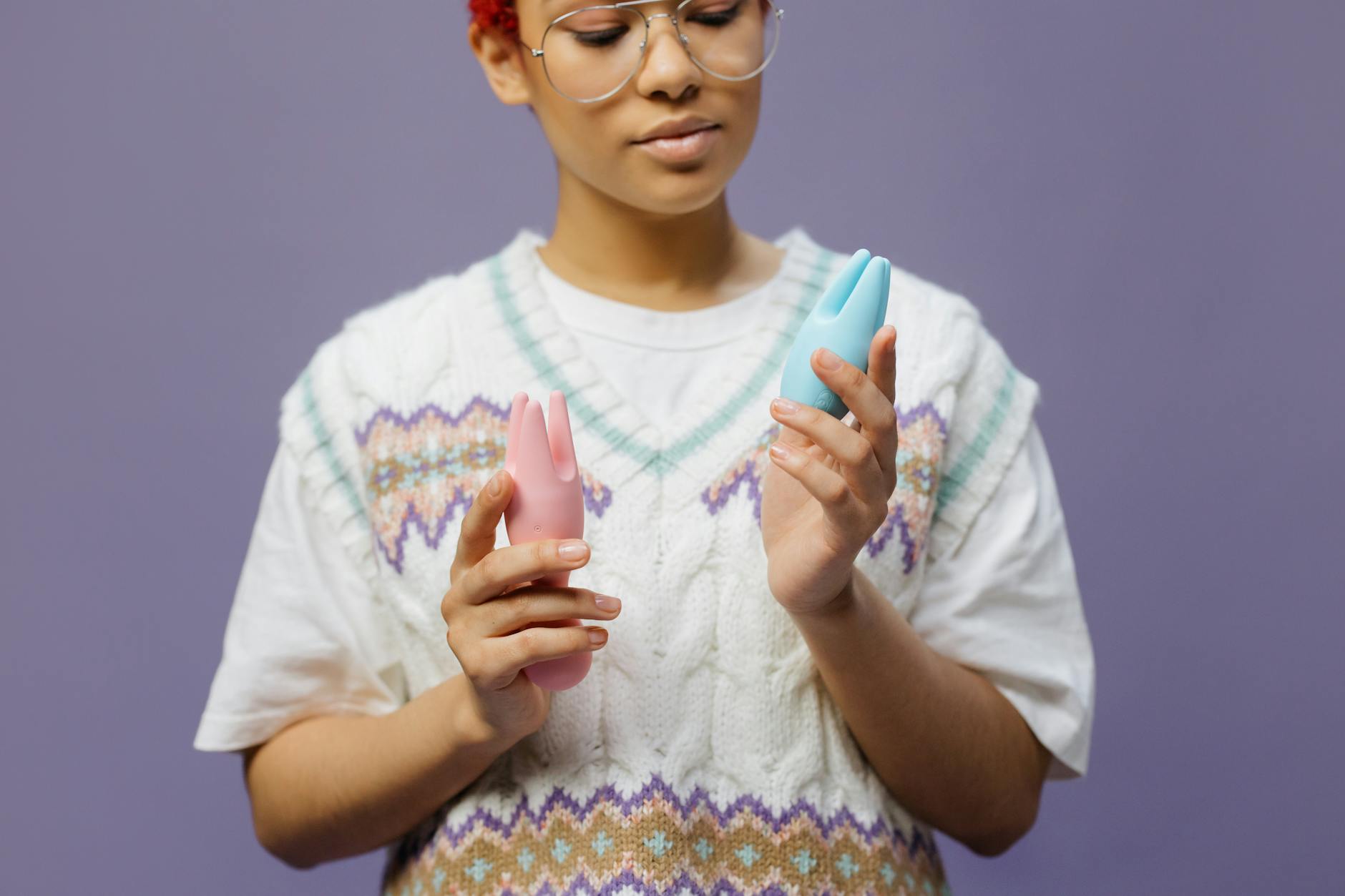
When touch becomes too much
Let's be real. Sometimes pleasure hurts. Not the good kind of hurt. The kind where your nervous system just says "no more" and you end up tensing instead of relaxing. Sensory overwhelm is wildly more common than people talk about, and it shows up in different ways. For some, it's a tactile thing. For others, it's cumulative. You feel fine for two minutes, then suddenly your whole system is screaming.
The good news: a lemon vibrator can actually help you manage this, not make it worse. But you have to use it differently. This is about intention, pacing, and control. Not about pushing through.
Why sensation becomes overwhelming
Sensory overwhelm happens when your nervous system gets flooded. It's not weakness. It's not broken. It's how some bodies are wired, and it's also context-dependent. You might be fine during one session and completely overwhelmed during another. Hormones, stress, previous trauma, neurodivergence, depression, medication changes, chronic pain, or just accumulated daily stimulation can all amplify sensitivity.
When you're already heightened, adding direct vibration to sensitive tissue can feel like it's too much, too fast, too intense. The solution isn't to quit. It's to redesign how you approach stimulation.
The Lem and other lemon clitoral vibrators work through air-suction technology, not direct friction. This matters. It means you have more control over intensity and can start gentler than you'd expect.
Start with the lowest setting, not for wimps
Most people never go below pattern 1 or 2. If you're sensitive, your baseline isn't there. Spend a full week, or even longer, exploring the lowest possible setting. Not as a warm-up. As the main event.
At the lowest intensity, a lemon vibrator creates a gentle stimulation that doesn't overwhelm. You're teaching your nervous system that pleasure can be subtle. You're also learning what your body feels like when it's actually responsive versus when it's shutting down.
Honestly, the lowest setting often delivers the best orgasms for people with sensory sensitivity. It's slower. It's not chasing anything. It just feels like sustained, manageable pleasure.
Create a hard stop rule
If you're prone to overwhelm, you need permission to stop immediately. Not "in a minute" or "let me finish this part." Now.
Set up a signal that means complete pause. It could be a hand gesture, saying a word out loud, or just putting the toy down. If you're solo, give yourself explicit permission to stop anytime without judgment. If you have a partner, talk about this beforehand so they understand it's not about them.
The paradox is that having a firm exit makes you less likely to need it. Your nervous system relaxes when it knows it can actually opt out.
Build in pauses
Don't use a lemon vibrator continuously. Use it in intervals. Two minutes on, one minute off. Three minutes on, two minutes off. Let sensation recede. Let your nervous system reset.
During the pause, you can use your hands, change position, breathe, or just lie still. The break isn't a failure. It's a feature. You're literally training your body to handle stimulation in doses.
Many people find that the pauses actually make the sensation more pleasurable. Your body isn't drowning. It's receiving.
Use external focus, not internal pressure
When sensation feels overwhelming, the instinct is to grip everything. Your pelvic floor tenses. Your thighs clench. Your breathing gets shallow. This makes it worse.
Instead, focus your attention externally. Where is the toy? What does it feel like on your skin? Can you notice the subtle differences between intensity levels? Can you describe the sensation in your mind without judgment?
This kind of focused attention is grounding. It's different from the "let me just power through" mentality. You're present. You're observing. Your nervous system settles.
Lower-intensity patterns, higher satisfaction
The Lem and similar lemon adult toys have different patterns. If intensity is your issue, skip the aggressive pulse patterns. Stick with the gentler waves or sustained hum options.
Pattern selection matters more than most people realize. A low-intensity pattern might feel manageable. That same intensity in a chaotic pulse pattern might feel overwhelming. Spend time with each pattern. Find the ones that feel good rather than aggressive.
What happens if you still feel numb?
Sometimes overwhelm comes with numbness. Your nervous system shuts down sensation as a protection mechanism. You feel the toy, but not in a good way. Just kind of... blank.
If this is happening, pause entirely. You might need a longer break. An hour, a day, a week. Pleasure isn't a deadline. When you come back to it, try less, not more. Try slower, not faster. When sensation feels numb or distant, there are specific strategies that help.
Solo versus partnered complexity
If you have a partner, communicate about what feels like too much. This isn't about them doing something wrong. It's about managing your own sensory reality together.
If they're using the toy on you and you feel overwhelmed, your words matter more than anything. "Slower," "gentler," "pause." These aren't criticisms. They're navigation.
If you're solo, the advantage is total control. You can stop instantly. You can adjust. You can spend 20 minutes with the lowest setting and call that a complete, satisfying session. No performance. No pacing to match someone else.
When medication or therapy shifts sensitivity
Some antidepressants, antihistamines, or anxiety meds can make sensation feel weird. Sometimes oversensitive, sometimes numb. If you've recently started something new and your sensitivity has changed, that's probably not coincidence.
Talk to your provider, but also give yourself grace. How to use a lemon vibrator when starting antidepressants is its own conversation. Your body might need time to adjust, and pleasure can still exist in that adjustment period.
Anxiety and overwhelm often travel together
If anxiety is part of your overwhelm, you might notice that you can't relax enough to feel pleasure, or that stimulation makes your anxiety worse. This is real, and it's manageable.
Before you even pick up a lemon vibrator, do something calming. A few minutes of slow breathing. A warm shower. Music. A partner's presence. Anything that genuinely settles your nervous system.
Then approach the toy without expectation. You're not trying to orgasm. You're just noticing sensation. If anxiety spikes, stop. That information matters.
The psychological permission piece
Here's what most people miss: sensory overwhelm often includes shame. "Why can't I handle this? Other people manage fine." That voice will kill your pleasure faster than anything physical.
Your nervous system is not broken. Your sensitivity is not a flaw. Adjusting how you use a lemon clitoral vibrator isn't settling for less. It's self-knowledge. It's control. It's the opposite of powerlessness.
FAQ
Can I use a lemon vibrator if I have tactile defensiveness?
Yes, but differently. Start with the toy over underwear or a thin fabric. Let your skin adjust to the sensation without direct contact. Many people find they can graduate to direct contact after a few sessions. Others stay with the barrier. Both are fine.
Will my sensitivity change over time?
Possibly. Some people's nervous systems desensitize gradually with consistent, low-pressure exposure. Others stay sensitive. Neither means you're doing it wrong. You're learning what works for your body right now, and that can shift.
Is sensory overwhelm the same as pain?
Not exactly. Overwhelm is often a flooding or intensity that doesn't hurt but feels unmanageable. Pain is distinct. If you're experiencing actual pain during pleasure, that's a different conversation and worth discussing with a healthcare provider.
What if my partner doesn't understand why I need it slower?
Educate gently. "My nervous system feels flooded when stimulation is fast or intense. I'm not rejecting you. I'm taking care of myself so I can actually enjoy this." Most partners get it once they understand it's not about them.
Can I use a lemon sucker toy if I'm on the autism spectrum?
Absolutely. Sensory sensitivity is common in autistic bodies. The key is the same: start low, use pauses, set hard stops, and trust your own limits. Your pleasure is valid at whatever intensity works.
Will a gentler approach eventually lead to more intense pleasure?
Sometimes. Some people gradually build tolerance. Others peak at low intensity. Both paths are pleasure. You're not working toward something. You're finding what actually feels good right now.