
Let's name the awkward thing
One of you wants to reconnect sexually. The other is still figuring out if they do. This is probably the most common couples dynamic that nobody actually talks about, and it creates a specific kind of tension because it's not really about sex at all. It's about feeling left behind, or pressured, or like you're moving at different speeds through the same relationship.
Here's what I see in my practice: desire doesn't return on a shared timeline. Life throws different things at each partner. Stress lands differently. Hormones shift on different schedules. Recovery from depression or grief or burnout happens at its own pace. And suddenly you're in a situation where one person is ready to rebuild intimacy and the other person is still not sure, and nobody knows what to do with that.
A lemon vibrator, used intentionally, can help. Not by forcing anything, but by creating a middle ground where both people can show up without resentment.
Why the pace mismatch happens
Let me separate this from the other mismatched-desire scenarios. This isn't about one partner having a permanently higher sex drive than the other. This is specifically about timing. One of you is emerging from something. Depression lifting. A medical issue resolved. Burnout breaking. And you're ready to start touching again. Your partner is still in recovery mode, or they're scared to want something that might disappoint them, or they're worried their body won't cooperate.
They're not rejecting you. They're protecting themselves.
The fastest way to turn this into actual resentment is for the ready partner to interpret the slow partner's hesitation as lack of interest in them. That's almost never what's happening. Usually the slower partner wants to want it. They're just not there yet.
How a lemon clitoral vibrator changes the dynamic
Here's the shift: instead of "Are we having sex tonight?" the conversation becomes "Want to explore together for ten minutes?" That's a completely different ask.
A lemon suction vibrator like the ones from Buy Lem Sucker is low-pressure in a way that penetrative sex often isn't. There's no performance expectation. You don't have to finish. You don't have to come. You can stop whenever it stops feeling good. The person using it is in complete control of the intensity and the timing.
For the partner who's still warming up, this feels safer. You're not being asked to be "ready." You're being asked to stay present for a few minutes and see what happens. That's dramatically less scary.
For the partner who's ready to reconnect, you get to touch your person again. You get to see them respond. You get proof that their body still works, that they still want pleasure, even if they're not ready for the full thing yet.
The conversation that needs to happen first
Don't just bring out a vibrator and hope it fixes things. That's how you end up with a partner who feels ambushed.
Instead, try this: "I miss touching you. I don't need us to have sex tonight. But I'd love to just be close and maybe explore a little bit together. No pressure to come, no pressure to do anything specific. Just us being present."
That conversation does a few things at once. It tells your partner you're thinking about them, not just about sex. It gives them an out if they're not feeling it. And it sets an expectation that this is low-stakes.
If your partner says yes, you can then introduce the vibrator idea. "I've been thinking about trying a lemon clitoral vibrator. Would you want to explore that together?" Again, framing it as exploration, not as a performance.
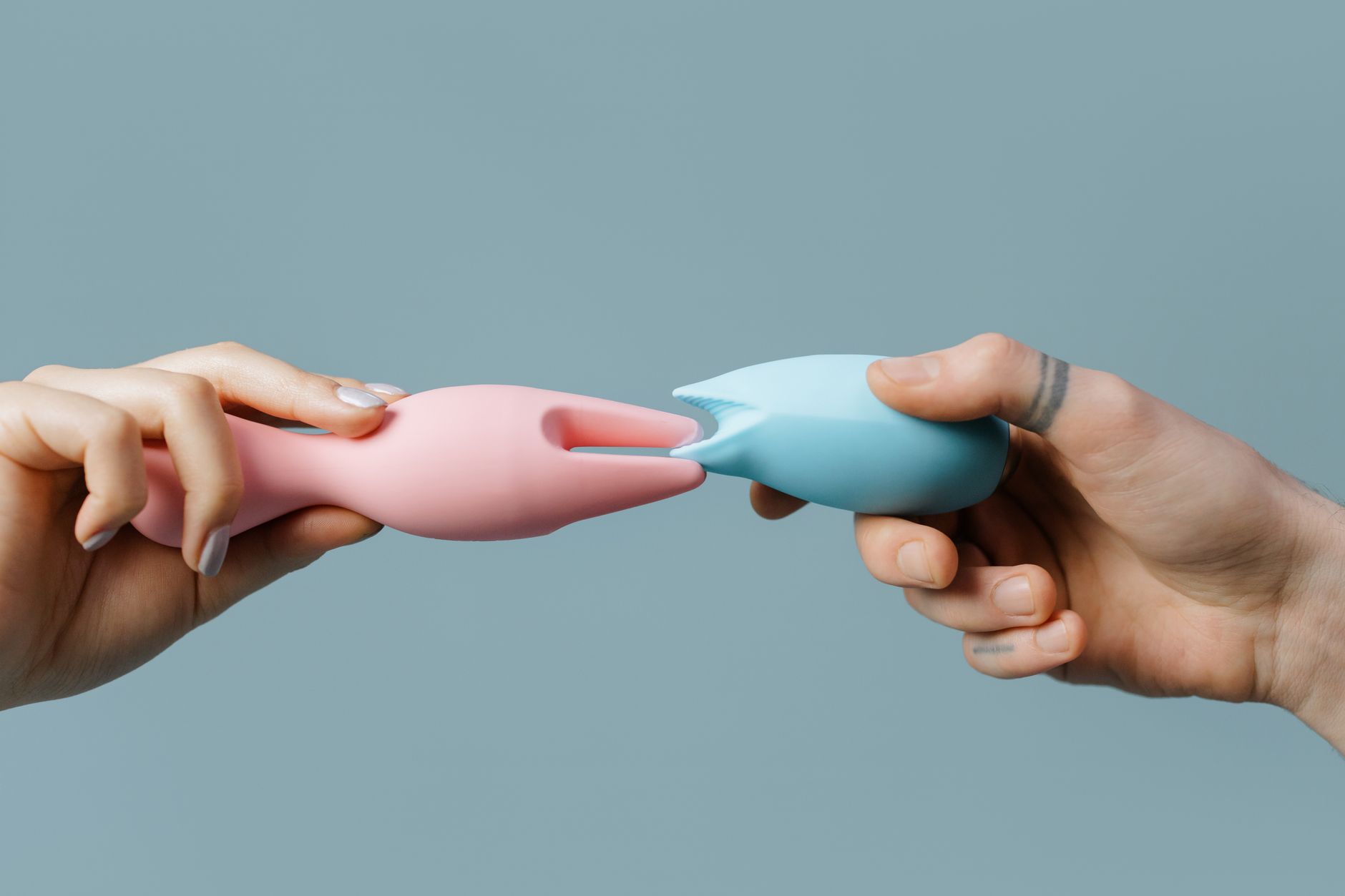
Photo by cottonbro studio on Pexels
What to actually do when you're both in the moment
Start with your hands. No vibrator yet. Touch your partner the way you used to. Let them touch you. Get curious about what they're responding to. This matters because it reminds both of you that pleasure exists between you, not just from a device.
When you introduce the lemon vibrator, keep it on a low setting first. The suction on a lem vibrator can feel intense if you're not expecting it, so let your partner control the speed. They should be the one holding it initially, even if they're not the one using it directly. That keeps them in charge.
This is important: don't rush toward an orgasm. The whole point is to rebuild connection, not to prove that they still work sexually. If an orgasm happens, great. If it doesn't, that's fine too. The goal is presence.
Take your time. Lem vibrators have multiple intensity settings for a reason. You might spend ten minutes at setting one. You might move to setting two. You might go back down. There's no right way.
What happens if one person wants to continue and the other doesn't
This is where the tool actually becomes brilliant. If your slower partner is enjoying the sensation but still isn't ready for more, they can keep using the vibrator and you can continue being present without expecting intercourse. You can touch them, talk to them, be close while they explore.
If the ready partner wants to continue but the slower partner is done, that's the moment to pause. "I'm going to take a few minutes for myself now. Stay with me?" Some people want quiet. Some want their partner to continue holding them. Check in.
What you're avoiding here is the situation where one person stops and the other feels sexually stranded. A lemon suction vibrator means the ready partner can finish themselves off, and it's not a rejection. It's just logistics. The slower partner gets to rest, and the ready partner gets to have an orgasm. Nobody feels bad about it.
How often should you be doing this
Honestly, it depends. If you're on very different timelines, once a week might be realistic. Maybe twice. The goal isn't to have sex all the time. The goal is to rebuild the habit of touching each other without pressure.
What matters more than frequency is consistency. If you do this every Wednesday night for fifteen minutes, your slower partner starts to feel safe because they know what to expect. Predictability builds trust faster than intensity does.
Over a few weeks, you'll probably notice your slower partner showing up with a little more openness. Not because you've convinced them to want sex, but because their nervous system has learned that touch with you is safe again.
The emotional work still has to happen
I want to be clear about what a lemon vibrator can and cannot do. It can create a safe container for physical reconnection. It cannot fix the underlying reasons your partner's desire disappeared. If there's resentment in the relationship, or if your partner is still in the middle of depression or grief, the vibrator is just a tool. You still need conversations. You might need a couples therapist.
But within the context of two people who love each other and are trying to find their way back to physical connection, this tool helps. It gives you something to do together that isn't scary. It gives your slower partner permission to go at their own pace. And it gives the ready partner something other than rejection to think about.
The lemon clitoral vibrator becomes a language for "I still want you, and I'm not going anywhere while you catch up."
FAQ
What if my partner feels weird about the vibrator?
That's completely normal. Some people grew up with shame around toys. Start by just leaving the vibrator in a visible place, like on your nightstand. Let them get used to seeing it. Talk about why you want to try it. Not as "you're not enough," but as "this is something we can explore together." If they're still uncomfortable, respect that boundary. The goal isn't to force a toy into your sex life. The goal is to rebuild connection.
Can we use the vibrator if I'm the slower partner?
Absolutely. In fact, some slower partners find it easier to explore on themselves while their partner is present and supportive. It takes the pressure off them to perform for their partner while they're still figuring out what they want. You get to go at your own pace while your partner gets to be part of the experience.
How long does it usually take before desire syncs back up?
It depends on what caused the mismatch in the first place. If it's just stress or burnout, a few weeks of consistent, low-pressure touch often helps. If there's trauma or medical issues involved, it might take longer. The point isn't to fix it fast. The point is to stay connected while you're both healing at your own pace.
What if my partner comes back to desire faster than expected?
Then you transition from a lemon vibrator as a bridge into maybe exploring it as part of regular sex. Or you don't. Some couples use it sometimes, some don't use it at all after the reconnection phase. The tool isn't permanent. It's just what you needed in this moment.
Should I be using the vibrator to help myself or on my partner?
Either. Or both. If you're the ready partner wanting to reconnect, explore it on yourself first so you know how it feels. Then offer to use it on your partner. Then ask your partner to use it on themselves while you're present. The variation is actually really valuable because it keeps things from feeling routine.
What if one of us isn't interested in desire returning yet?
Then this isn't the right tool or the right timing. If your partner has explicitly said they don't want to rebuild sexual connection right now, pushing with a vibrator is pressure. What you actually need is a conversation about what they do want, and whether you're on the same page about your relationship long-term.
You don't have to move at the same speed
I work with couples all the time where one person is ready and the other isn't, and the thing that saves the relationship is refusing to make it mean something it doesn't. Your partner's slow return to desire isn't about you. Your readiness to reconnect isn't about pressure. You're just two people trying to find your way back to each other.
A lemon clitoral vibrator helps because it gives you something to do that doesn't require you both to be in the same place at the same time. You can start showing up for each other while you're both still figuring things out. And sometimes, the reconnection through a tool like this is what opens the door to deeper conversations about what you both actually want and need.
If you're thinking about trying this, start with the conversation. Skip the vibrator if it doesn't feel right. But know that you're not alone in this dynamic, and there are tools available that can help if you want them. Take it at whatever pace works for both of you.