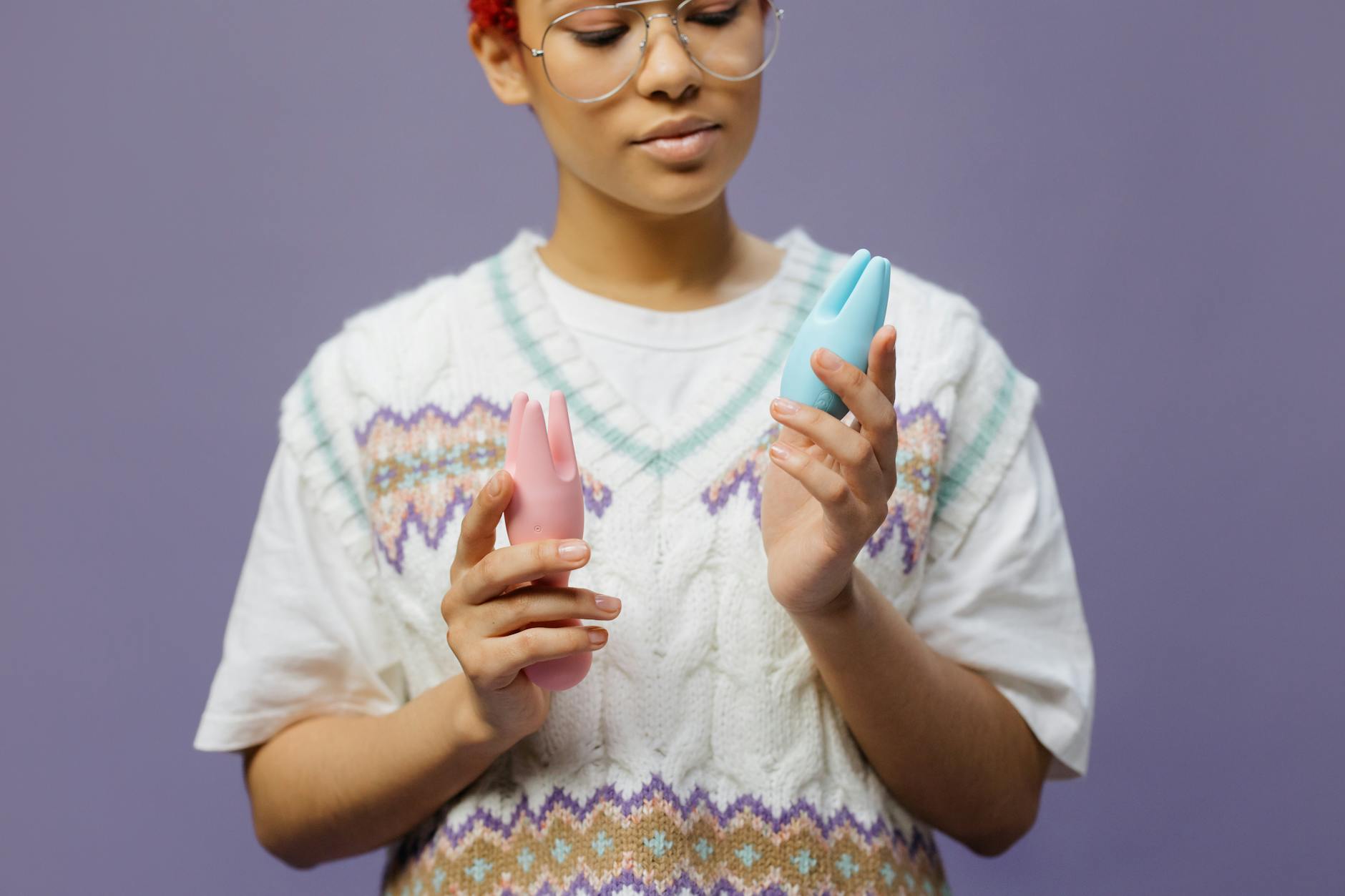
Let's talk about what happens when depression lifts
Depression numbs pleasure. That's not metaphorical. It's neurological. Your brain stops producing serotonin and dopamine at the levels needed to feel anything, let alone desire. So when depression starts loosening its grip, one of the strangest experiences is feeling libido return. Your body wants sex again. But your mind hasn't caught up. You don't recognize yourself. And that's completely normal.
The good news? You're not broken. You're waking up. And you can rebuild sexual confidence in small, manageable steps. The lemon clitoral vibrator, especially one like the Lem, is one of the gentlest ways to do that because it lets you go at your own pace. No pressure. No performance. Just you and sensation.
Why desire comes back in stages, not all at once
Depression is a full-body shutdown. When medication works or therapy clicks, your nervous system doesn't flip back on like a light switch. It's more like a dimmer. Some days you feel a flicker of interest. Other days you're back to flat. This isn't failure. This is healing happening unevenly.
Your brain is also learning to trust pleasure again. Depression tells you that nothing feels good. That lie lives in your neural pathways. So even when your body is hormonally ready, your mind might pump the brakes. It's a protective reflex. It kept you safe during depression. You don't need it anymore, but your brain doesn't know that yet.
The rebuild has to be slow enough that your mind can catch up with your body. That's where a tool like the Lem comes in. It's not aggressive. It's not pushy. It's precise and responsive. You control the speed, the intensity, the rhythm. That agency matters.
Starting with your body, not your mind
Here's what I tell my clients who are waking up sexually after depression. Your mind might still be skeptical. That's fine. Start with your body anyway.
Set aside 20 minutes when you're alone and not rushed. No phones. No guilt. Just the space to notice what you feel. Lie down somewhere comfortable. Maybe put on music you love or keep it silent. Take a few breaths. Let your body tell you what it needs.
Start with the Lem on the lowest setting. If you have the lemon clitoral vibrator, pattern 1 is almost gentle. Don't go looking for an orgasm. Just explore the sensation. What does suction feel like after months of numbness? Sometimes it's overwhelming. Sometimes it's neutral. Sometimes it's exactly what you needed. All three responses are fine.
Many people coming out of depression feel guilty about pleasure. You don't deserve that guilt. Your body healing is not a luxury. It's part of recovery.
The three stages of rebuilding sexual confidence
Stage one: sensation without expectation. This is where you are if you're just starting. The goal is not an orgasm. The goal is to feel something. Pleasure can be tiny. A tingle. A moment of focus. That counts. Spend 2-3 sessions here before moving forward.
Stage two: exploring intensity. Once you've gotten used to the feeling of the Lem, try the second or third pattern. Your clitoris has thousands of nerve endings. Some prefer steady suction. Some like pulsing rhythm. You might not know which is yours yet because depression interrupted the conversation between your brain and your body. This stage is about having that conversation again. It might take a few weeks.
Stage three: building stamina. After a few sessions in stage two, you can push into longer sessions without it feeling overwhelming. Maybe you stay on pattern 1 for longer. Maybe you graduate to higher intensity for 10 minutes before backing off. Your nervous system is learning to regulate pleasure again. That takes time. Don't rush it.
Why partner sex might feel harder than solo
If you're in a relationship, here's something that catches people off guard. Solo pleasure often comes back before partnered sex does. That's not weird. That makes sense.
With a partner, you have the added layer of self-consciousness, performance pressure, and their expectations (real or imagined). Solo, you only have yourself to please. There's less cognitive load. Less chance of your brain interrupting with shame or worry.
If you're rebuilding solo first, that's the right move. Build confidence in your own body. Learn what the Lem does for you. Then, when you're ready, bring that knowledge to partnered sex. You can show your partner what works. You can ask for patience while you figure this out. This conversation is way easier when you already know your own body.
What depression recovery teaches you about pleasure
One thing I've noticed working with clients coming out of depression is that they often emerge with a clearer sense of what they actually want. Depression silences preferences. When it lifts, clarity comes back. You might discover that you like sensation in ways you didn't before. Or that you want touch differently than you used to. That's not change. That's honesty.
The lemon clitoral vibrator, because it's so precise, actually helps with this discovery. You can feel exactly where sensation lives. You can notice subtle differences between patterns. That sensitivity is your nervous system coming back online. It's a good sign.
The comparison trap and why you can't do it
Here's the thing nobody says: you might not come back to exactly the same sexual self you were before depression. Your orgasms might feel different. Your arousal might build differently. Your turn-ons might have shifted. That's not loss. That's evolution.
Your job is not to recreate the past version of your sexuality. Your job is to build the version that works for you now. The Lem can help you find it because it's sensitive enough to let you notice subtlety. You don't have to perform with it. You get to explore.
When to reach out for help
If you're six weeks into rebuilding and pleasure still feels completely absent, or if you're having pain during sex, talk to your doctor. Sometimes depression medication affects arousal. Sometimes there's a physical component. A good therapist or sex coach can also help navigate the psychological side. There's no shame in that. It's part of recovery.
The same goes if you're feeling guilt, shame, or numbness that won't budge. Depression leaves residue in the nervous system. That residue can take time to clear. Professional support can speed that up.
Your pleasure is part of your recovery
So many people treat sexuality as optional after depression. A nice-to-have once they're "better." But pleasure is actually a vital sign. It's your body's way of saying yes to life. Yes to sensation. Yes to yourself.
Using the Lem or another lemon sexual toy during this rebuild isn't indulgent. It's medicine. It's you telling your nervous system that you're safe. That good things can feel good. That you're still here and you still deserve to feel alive.
Start small. Be patient. Let your body lead. The rest will follow.
FAQ: Rebuilding pleasure after depression
How long does it typically take for libido to return after depression treatment starts?
There's no timeline that fits everyone. Some people notice shifts in weeks. Others take months. It depends on your depression type, your medication (if you're on any), how long the depression lasted, and your individual neurobiology. The important thing is that you're noticing movement, not that you're moving fast. Progress is progress.
Is it normal to feel guilty about enjoying pleasure again after depression?
Completely normal. Depression often comes with a story that you don't deserve good things. Pleasure feels like breaking a rule. It's not a rule. It's just a lie your depressed brain told you. Every time you feel pleasure and don't run from it, you're rewiring that lie. The Lem, because it's controllable and low-pressure, helps you practice this without performance stakes.
Can the Lem help if I'm still on antidepressants?
Absolutely. Some antidepressants do affect arousal. If yours do, that's worth discussing with your prescriber. But many people on SSRIs or other medications find that a precise clitoral vibrator like the Lem actually helps them access sensation they wouldn't feel otherwise. The suction mechanism can bypass some of that numbness. Try it and see what your body tells you.
What if my partner wants sex before I feel ready?
That's a conversation, not a problem you have to solve alone. You might say something like, "My body is healing. I'm rebuilding my relationship with pleasure on my own timeline. I need you to be patient while I figure this out. Here's what I need." A good partner will respect that. If they won't, that's information too. Your recovery matters more than their comfort.
Should I use the Lem alone or with a partner when I'm rebuilding?
Start alone. Full stop. You need to know your body in a no-pressure context before adding another person's needs or presence into the mix. Once you're comfortable solo (which might take a few weeks), you can gradually bring a partner in. Let them watch. Show them what you like. Build together. But solo first.
Is it okay to use pleasure as a coping mechanism instead of addressing the depression itself?
No. And I want to be really clear about this. The Lem and other lemon vibrators are tools for building connection with your body. They're not therapy. If depression is still present, that needs professional treatment. Pleasure helps your nervous system heal alongside therapy and medication. It doesn't replace them. Use the Lem as part of your recovery toolkit, not as a substitute for mental health care.
You're rebuilding, not starting from scratch
The sexuality you had before depression isn't gone. It's dormant. Your job right now is to wake it up gently. The Lem is a good partner in that work because it respects your pace. It doesn't demand performance. It just asks you to feel.
Your nervous system is learning to trust pleasure again. That takes time. Be patient with yourself. You're not broken. You're recovering. And recovery, by definition, means coming back to life. Pleasure is part of that. You deserve it.
When you're ready to explore further, you might check out how to rebuild pleasure after anxiety blocks arousal or how to reconnect with pleasure after numbness for next steps in your journey.
If you have questions about starting again or want personalized guidance, reach out to us. We're here to support you.