Let's name what's actually happening
You're good at things. You hit your targets, you show up prepared, you deliver. That same brain that crushed your presentation at 9 a.m. is now trying to "maximize" your orgasm at night. And it's not working. Because pleasure isn't a metric. It's not something you optimize or fail at. The moment you make it a performance, your nervous system locks up.
This is the exact opposite of what arousal needs. Arousal requires surrender. It requires not-knowing. It requires the opposite of control. If you've spent your entire professional life being hypervigilant about outcomes, your body has learned that letting go equals losing. So it doesn't.
How perfectionism shuts down physical sensation
Here's the neurobiology: your sympathetic nervous system (the "fight or flight" network) and your parasympathetic system (the "rest and digest" network) can't both fire at full volume. When you're in achievement mode, your sympathetic system is dominant. Your body is scanning for what's wrong, what needs fixing, where you're falling short. That's useful in a boardroom. It's catastrophic for arousal.
Sex requires parasympathetic dominance. That means lowered heart rate, softened vigilance, permission for inefficiency. For high achievers, this is genuinely uncomfortable. Your nervous system has been trained to read relaxation as laziness or vulnerability.
Add the perfectionism layer and you get monitoring. You're watching yourself have sex. Grading the experience in real time. "Is this working? Should I feel more by now? Am I doing this right?" The attention you're paying to performance is the exact thing killing sensation.

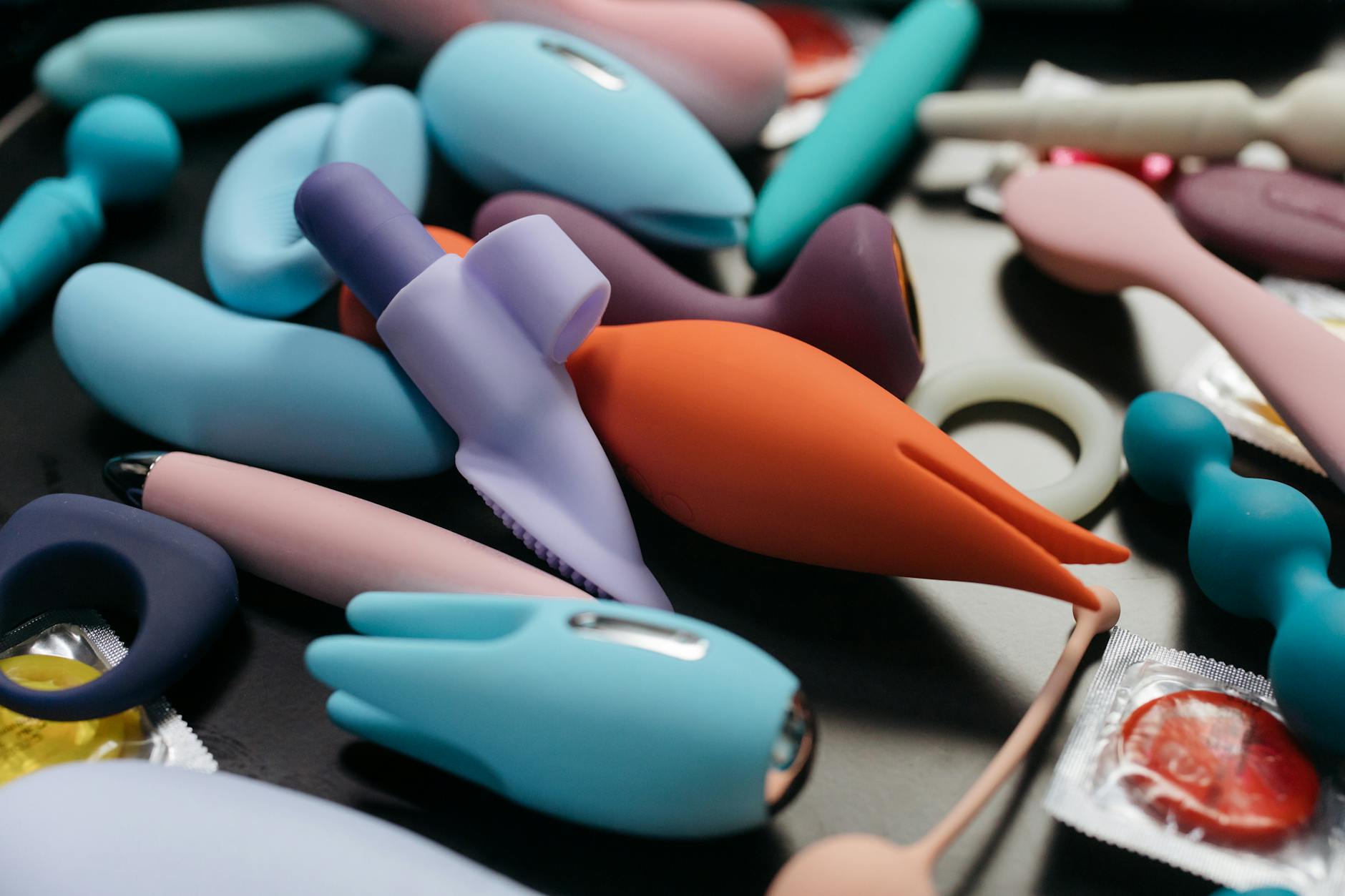
Photo by cottonbro studio on Pexels
Why a lemon vibrator resets this pattern
A lemon clitoral vibrator like the Lem works well for this specific block because it removes the "doing it right" variable. You're not trying to stimulate yourself manually. You're not adjusting pressure or rhythm based on intuition. The device is doing the work. Your only job is to receive.
For a perfectionist, this is weirdly liberating. There's no technique to perfect. There's no way to "fail" at holding it in place. You literally cannot optimize this into submission.
The other thing a lemon vibrator does is distribute sensation differently than manual stimulation. The suction pattern on clitoral tissue is rhythmic and consistent. Your brain can't argue with it. It can't second-guess it. After a few minutes of consistent stimulation, your nervous system stops scanning for problems and starts... actually feeling.
The permission paradox
Here's what I tell my high-achieving clients: pleasure isn't a reward you earn by being productive. It's not something you have to deserve. It's not conditional on having done enough.
Yet most perfectionists have built entire lives on the assumption that relaxation and pleasure are things you get after you finish the list. Except the list never finishes. So you never actually arrive.
Using a lemon vibrator solo is a way to practice a different contract with your body. You set a timer. Twenty minutes. That's it. No goal. No checklist. No metrics. The intention is just to be present with sensation for that block of time.
For the first few sessions, this might feel useless or boring. Your brain is used to striving. Stillness feels like failure. That's okay. Keep going. The point isn't the orgasm. The point is the permission.
How to actually do this
Start with three conditions that support nervous system settling:
1. A locked door and no time pressure. This sounds obvious but it matters. If there's any part of you monitoring time or listening for interruptions, your sympathetic system stays partially engaged. Clear the time. Make sure you won't be interrupted. Your body needs to know it's genuinely safe to drop into parasympathetic mode.
2. Start with touch, not the device. Spend five to ten minutes just touching your own skin. Shoulders, neck, inner thighs, breasts. Slow. Not trying to get aroused. Just noticing sensation. This is the antidote to performance mode. You're learning to feel without evaluating. This is harder than it sounds.
3. Introduce the lemon vibrator on a lower setting. Don't start on the highest intensity. Move to a comfortable position, use water-based lubricant if you want it, and let the pattern do the work. Your job is to notice what you're feeling without changing it, without editing it, without wondering if it's "enough."
The internal monologue probably goes: "Is this working? Should I feel something by now? Maybe I should switch positions." Every time you notice that voice, gently redirect. "Not right now. Right now I'm just feeling what there is to feel."
The learning curve is real
It takes time for a high-achiever nervous system to unlearn performance mode. Some people feel the shift in two or three sessions. Others need weeks. There's no timeline you're behind on. (See? Your brain wants to make this a race too.)
You might notice that pleasure shows up in unexpected ways. Maybe it's not the explosive orgasm you were expecting. Maybe it's gentler. Maybe it's stillness. Maybe it's a feeling of looseness in your shoulders you haven't had in months. All of that counts. All of that is the nervous system learning that letting go doesn't mean disaster.
When to layer in a partner
Once you've spent a few sessions reconnecting with sensation on your own, bringing a lemon vibrator into partnered sex can deepen things. But here's the critical part: don't invite your partner into this transition until you've done the solo work. If you introduce the vibrator while still in performance mode, it just becomes another tool to optimize with.
After you've spent time alone discovering that sensation exists without judgment, you can show your partner. "I've been using this and I've noticed I feel more when I'm not thinking about whether I'm doing it right." That's honest. That's also permission for your partner to stop performing too.
The bigger pattern
Using a lemon clitoral vibrator to work through perfectionism blocks isn't just about sex. It's a nervous system practice. You're teaching your body that there are spaces in life where excellence isn't the goal. Where showing up and being present is enough. Where you can't optimize your way to a feeling.
That skill transfers. When you can drop into parasympathetic mode intentionally for twenty minutes with a vibrator, it becomes easier to access that state in other contexts. Conversation. Rest. Being wrong. Not knowing the answer.
Your nervous system is trainable. It's learned high performance. It can learn something different too.
People also ask
Can a lemon vibrator actually help with anxiety that blocks arousal?
Yes, but with nuance. A lemon vibrator provides consistent external stimulation, which can help interrupt the anxiety feedback loop. When your brain is spinning with performance thoughts, the rhythmic sensation on your clitoris gives your nervous system something to focus on besides the anxiety. Over time, this practice helps rewire the association between solo pleasure and performance. That said, if anxiety is severe, working with a therapist alongside using a device is more effective than either alone. Many of my clients find that combining talk therapy (to unpack where the perfectionism comes from) and nervous system practices (like vibrator use) creates faster, stickier change.
How do I know if I'm actually experiencing pleasure or just physical sensation?
This question itself is the perfectionist talking. There's not a hard line between "real" pleasure and "just" sensation. Pleasure is sensation that you notice without judgment. Early on, you might only feel physical stimulation. That's fine. That's the work. As your nervous system relaxes, sensation becomes more layered. You might notice warmth, or ease, or a loosening in your chest. All of that is pleasure. The moment you start grading the experience on a pleasure scale, you've left the parasympathetic system and gone back into performance mode. Notice that, come back to feeling, and keep going.
What if I use a lemon vibrator and still can't come?
Orgasm isn't the finish line. I know that's hard for achievement-oriented people to hear. But if your entire goal is reaching climax, you're still in performance mode. The actual goal is reconnecting with sensation without judgment. Some sessions will include orgasm. Some won't. Both are data, neither is failure. If you've done ten to fifteen solo sessions with a lemon vibrator focusing purely on sensation (not outcome), and orgasm still doesn't arrive, that's worth exploring with a sex therapist or coach. There might be a deeper block. But chasing the orgasm harder is the wrong direction.
Can I use a lemon vibrator if I'm on antidepressants that affect sensation?
Yes. Antidepressants sometimes reduce sensation or make orgasm harder to reach. That's medical reality, not personal failure. A lemon vibrator's consistent stimulation can actually help. The rhythmic suction pattern is often more effective than manual stimulation when medication has muted sensation. That said, talk to your prescriber or a sex-positive therapist about whether your current medication is the right fit for you, or whether dosage tweaks might help. Sometimes a small change on that side makes a bigger difference than any device.
How long does it take to retrain my nervous system out of performance mode?
Depends on how deep the perfectionism runs, and how consistently you practice. I've seen people feel the shift after five sessions. I've also worked with clients who needed three months of weekly practice before their nervous system genuinely trusted that letting go was safe. The key is consistency without pressure. (Yes, that's paradoxical. Welcome to nervous system work.) Aim for once a week minimum. Don't make it another item on your optimization list. Think of it as a standing appointment with your own body.
Is it normal to feel resistant to using a vibrator because it feels "lazy" compared to partnered sex?
Completely normal for achievement-oriented people. You've been told your whole life that effort equals value. Solo pleasure with a device can feel like you're not doing enough, not trying hard enough, not earning it. That's the perfectionism voice. Keep using the lemon vibrator anyway. That resistance is information. It's your nervous system telling you that you're getting close to the edge of control, which is exactly where the growth happens. The discomfort fades once you realize that receiving sensation is its own form of work.
Your body knows how to feel. Your brain just needs permission to stop managing the experience and let it unfold. A lemon vibrator is one tool for practicing that permission. The real work is deciding that your pleasure matters enough to stop optimizing it.
Ready to reconnect with sensation on your own terms? Reach out if you want to talk through what's blocking you. Contact us.