The awkward truth about getting back together
Time apart rewires your bodies. Your partner's touch feels different. Your responses feel slower or sharper or sometimes just absent. That's not a sign something's broken between you. That's just what happens when physical contact stops for weeks or months. The nervous system needs recalibration.
Here's what most couples don't talk about: restarting sex after separation is harder than starting it for the first time. You have memory and expectation working against you. You remember what it felt like before. You expect it to feel the same instantly. And when it doesn't, panic sets in.
I've worked with hundreds of couples rebuilding after military deployments, work separations, illness, or just drift. The ones who move forward fastest aren't the ones with the strongest relationships going in. They're the ones who treat reconnection like a conversation instead of a performance.
Why time apart actually changes physical response
When you're not touching regularly, your skin sensitivity shifts. Touch receptors that were firing on high alert go quiet. Arousal patterns change. What used to work takes longer now, or feels too intense, or lands sideways because the context is unfamiliar.
Your partner may feel that too. Don't assume they're more ready than you are, or vice versa. Assume nothing. Ask.
There's also the psychological piece: shame about the gap, anxiety about whether attraction is still there, worry that you've forgotten how to do this. Those feelings literally suppress arousal. Your nervous system is in protection mode, not reception mode.
Why external stimulation helps the restart
Here's the thing about rebuilding: adding a lemon clitoral vibrator isn't about replacing your partner. It's about removing the pressure from both of you to perform perfectly the first time back.
When you introduce a toy into the reconnection process, the focus shifts. It's no longer "Am I responding right? Is my partner noticing if I'm not?" The focus becomes curiosity: "What feels good now? What's different?" That reframe is everything.
A lemon clitoral vibrator specifically works well because it's external and doesn't require the same sensitivity as penetration. After time apart, your pelvic floor might be tense. Your tissue might be temporarily less lubricated. You're tired or nervous or both. Clitoral stimulation skips a lot of that friction and gets straight to nerve pathways that stay active even when you've been apart.
How to introduce it without making it weird
First: talk before you touch. Not a heavy talk. Not "We need to discuss our intimacy." Just something like "I've been thinking about us getting back to feeling good together, and I found this thing I want to try. Would you be into that?"
If your partner's hesitant, don't push. Instead, ask what they're worried about. Usually it's one of three things: (1) they feel like they're being replaced, (2) they're nervous it means you weren't satisfied before, or (3) they're just uncomfortable with anything unfamiliar.
None of those are deal-breakers. You just have to name them.
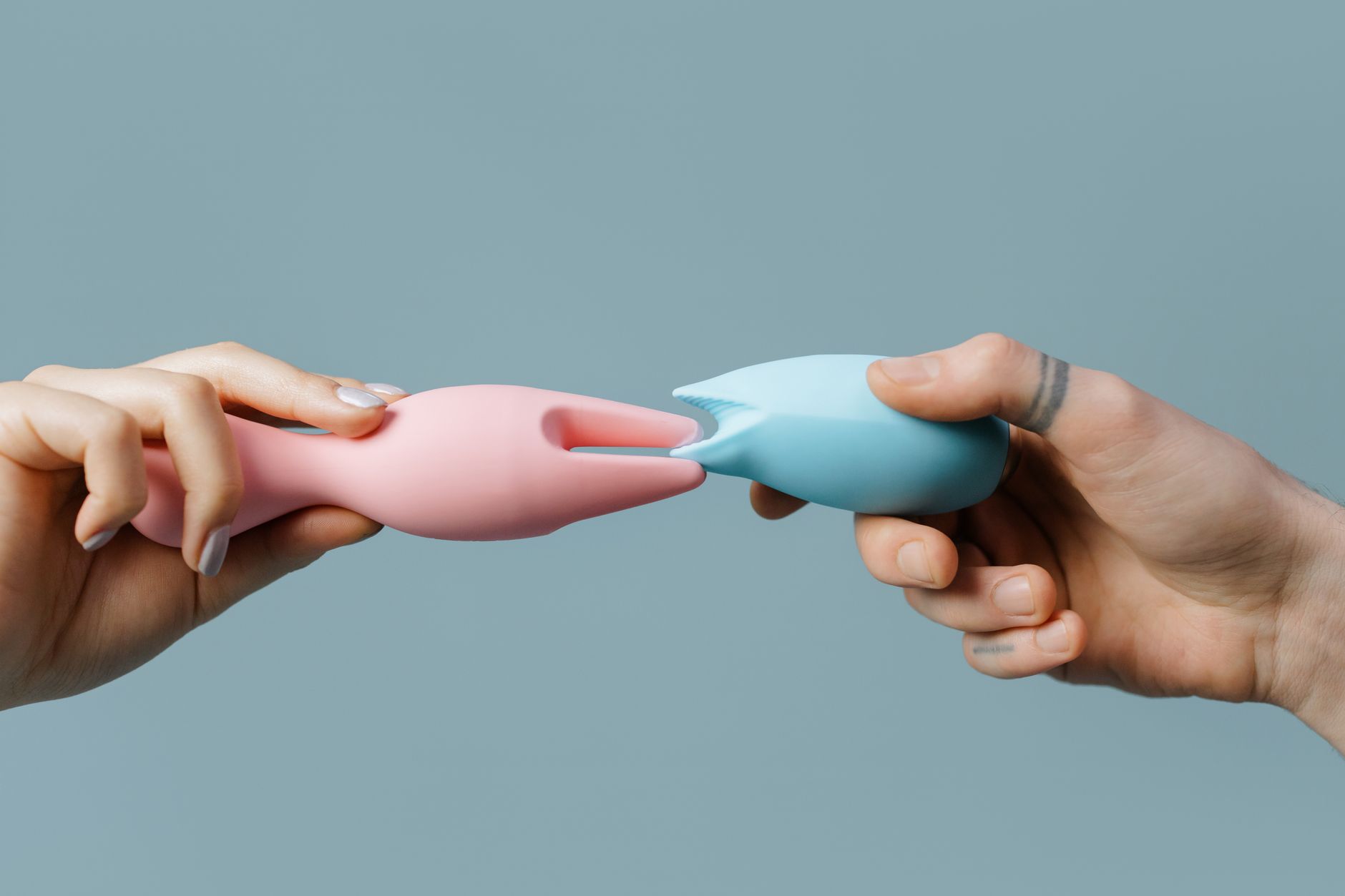 Photo by cottonbro studio on Pexels
Then: start with clothes on. Seriously. Sit together, turn it on the lowest setting, and let them feel what the sensation is like without any nakedness or expectation attached. This isn't foreplay. It's a demo. Your partner might think it's hot, might think it's silly, might feel relieved that it's not a weird wand thing they imagined. All good.
Building back to sex together
Once you've both gotten past the strangeness, here's a practical framework for reconnecting without it feeling like a performance.
Step one: slower than you think you need to be. You haven't touched in a while. Your nervous system is still in alert mode. Budget 20-30 minutes just for kissing and non-sexual touch before anything with the lemon vibrator enters the scene. Let your skin wake up.
Step two: start the vibrator externally, on a low pattern. The Lem has four intensity levels for a reason. Most people jump to level three on the first try back. Don't. Let the stimulation build gradually. This isn't about racing to orgasm. It's about remapping sensation.
Step three: your partner can hold the vibrator, or you can. Honestly, if you're nervous, having them hold it is less pressure because you can just respond. You don't have to manage the device and your body at the same time.
Step four: stay present. If your mind goes to "Does this feel as good as before?" or "Am I taking too long?" or "Is my partner bored?" you'll tank the experience. Notice those thoughts and let them pass. We're not trying to recreate what was. We're discovering what's here now.
Step five: orgasm is optional. Genuinely. The goal of reconnecting isn't to prove you can still come. It's to rebuild the feeling of safety and pleasure in your body with your partner near. If an orgasm happens, great. If it doesn't, you still succeeded.
What gets in the way (and how to move past it)
After a separation, shame loves to show up. You feel guilty about the gap. You feel broken for not being instantly ready. You feel like your partner's judging you, even if they're not.
Shame kills arousal faster than almost anything else. So if you notice it, pause. Tell your partner: "I'm feeling a bit vulnerable here, and I need to slow down for a second." That's not sexy or scripted, but it's honest. And honestly often turns out to be way sexier than trying to perform through discomfort.
Some couples also struggle with mismatched readiness. One partner is excited to reconnect physically, the other's still hesitant. If that's you, use a lemon clitoral vibrator as a lower-stakes way to close that gap. The hesitant partner can start with solo exploration, building confidence in their own body first. Then introducing it with a partner feels less risky.
When to know it's actually working
You'll know reconnection is landing when the awkwardness stops feeling like a problem and starts feeling like part of the story. When you can laugh at the fumbling. When you can pause mid-scene to adjust something and it doesn't kill the moment. When the lemon vibrator becomes a regular part of your intimacy instead of a band-aid.
You'll also notice your nervous system relaxing in other areas. More eye contact. More spontaneous touch outside the bedroom. More willingness to be vulnerable. That's the real marker that time apart is actually being bridged.
Some couples find that reconnecting after a gap is actually better than what they had before. You slow down. You pay attention. You don't take touch for granted. The lemon clitoral vibrator becomes part of that intentionality instead of a workaround.
The longer conversation underneath
Here's what I tell every couple working through post-separation intimacy: the toy isn't the point. The point is that you're both saying "I want to feel close to you again, and I'm willing to try something new to get there." That willingness is where reconnection actually starts.
Time apart tests relationships. But it doesn't have to end them. Sometimes it just requires new language, new tools, and permission to rebuild instead of resume. A lemon clitoral vibrator can be part of that rebuilding. So can patience, curiosity, and a partner willing to ask "What do you need right now?" instead of assuming.
The good news: every couple who moves through this successfully reports that the sex after reconnection often feels deeper than before. Because now it's intentional. Now it's chosen. And now you both know exactly what it took to get back here.
People also ask
How long does it usually take to feel comfortable with intimacy again after time apart?
There's no fixed timeline. Some couples click back into physical comfort in a few weeks. Others take two to three months. What matters isn't speed. It's consistency. Regular non-sexual touch (hand holding, kissing, massage) usually rebuilds faster than jumping straight to sex. Adding a lemon clitoral vibrator can actually accelerate that process because it removes performance pressure and lets you both just explore sensation together without the stakes of penetration.
What if my partner isn't interested in using a vibrator when we reconnect?
That's fair and also important information. Ask why. Are they uninterested in toys generally, or are they nervous specifically about what it means if you bring one in? There's a big difference. If they're just not a toy person, that's fine. You can rebuild intimacy without external stimulation. If they're worried it means something's wrong between you, that's a conversation worth having. You're using it to rebuild, not because the relationship is broken.
Can we use a lemon clitoral vibrator during sex after time apart, or should we start solo first?
Either works, but introducing it during partnered time is usually easier than asking your partner to watch you use one solo first. That can feel isolating to them. Instead, try the approach I outlined above: start with it on, clothes on, just exploring what the sensation feels like together. That's collaborative and way less awkward than "I'm going to go in the other room now."
What if we reconnect and realize we're not attracted to each other anymore?
That's possible, and it's also important data. Time apart sometimes reveals that the relationship had bigger issues than just distance. But usually, attraction is still there. It's just buried under nerves and shame and weird feelings about the gap. Give it a few weeks of patient, playful reconnection before you assume attraction is actually gone. If it still feels absent after you've both genuinely tried, that's a conversation for a couples therapist, not something to solve with a toy.
Is it normal to feel pressure to perform when reconnecting with a partner?
Completely normal. You've been apart. There's this expectation (from both of you) that you'll jump back into how things were. You won't. Your bodies have changed. Your arousal patterns have changed. Your comfort levels might have changed. All of that is normal. The pressure you're feeling is real, but it's also optional. You can acknowledge it, name it out loud to your partner, and agree together to skip the performance and just explore. That usually defuses the pressure immediately.
Does using a lemon vibrator affect how we connect without it later on?
No. If anything, it helps. Once you've used a lemon clitoral vibrator together and realized that external stimulation doesn't replace your partner, it usually becomes just another tool you pull out sometimes. Your main intimate connection is still each other. The vibrator is just there to handle the job it does really well: consistent clitoral stimulation that lets you relax into pleasure instead of working for it. After time apart especially, that permission to relax is everything.
Final word
Reconnecting after separation isn't about picking up where you left off. It's about choosing each other again, this time with eyes wide open and maybe a lemon vibrator in hand. The tools matter less than the conversation. The conversation matters less than the commitment to stay present with whatever feelings come up. And that commitment is what actually rebuilds intimacy. Everything else is just support.
If you're navigating a post-separation reconnection and want to talk through the specific dynamics of your relationship, I'm here. Get in touch anytime.