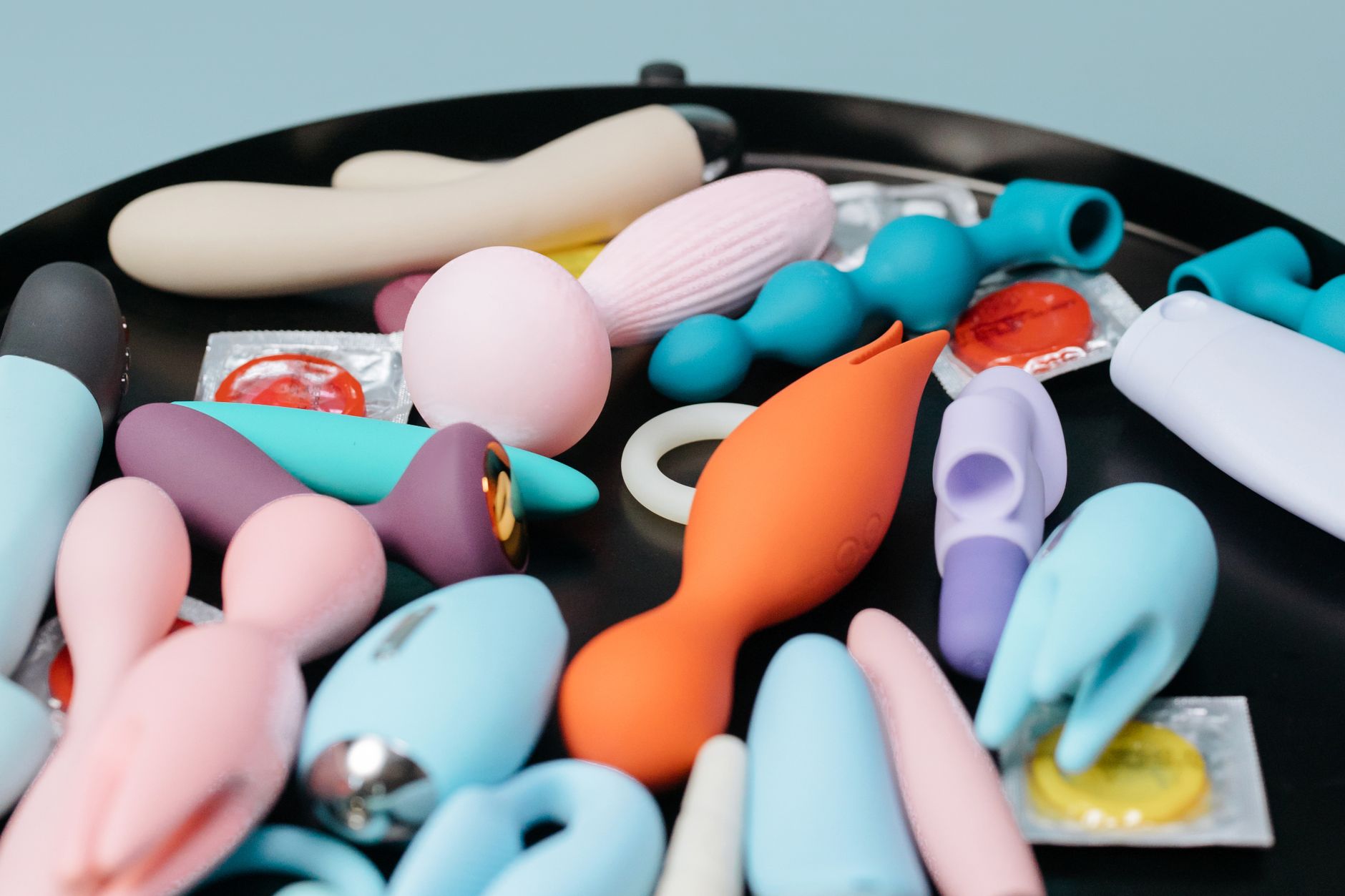
Let's talk about settings like they actually matter
Here's the thing nobody tells you about lemon clitoral vibrators: there's a massive difference between using one and using it well. Most people default to whatever intensity feels good in moment one and hope for the best. But your body doesn't want the same thing across the entire arc of arousal. It wants escalation. Variation. Precision.
This is where understanding the stages of your own pleasure becomes a game changer. Once you know what your body needs at each point, you're no longer guessing. You're building something intentional.
Early arousal: why you want to start low
The beginning of arousal is subtle. Blood is beginning to flow to your clitoris, sensation is heightening, and your nervous system is shifting into a more receptive state. This is when a high intensity setting actually works against you.
When you jump straight to intensity 5 or 6 on your lemon vibrator, you're flooding your nervous system too fast. This can feel good initially, but it often leads to plateauing midway through. You've exhausted the novelty of sensation before your arousal has truly built.
Instead, start at setting 1 or 2. This might feel almost gentle, maybe underwhelming in the first 30 seconds. That feeling is exactly right. What you're doing is creating contrast. As your arousal climbs, that gentle starting point becomes the foundation for everything that follows. You're priming your body to actually feel the escalation.
With lemon sucker technology specifically, even the lowest settings create consistent, rhythmic stimulation. You don't need high intensity to feel something; you need presence.
Building phase: where rhythm matters more than power
About five to fifteen minutes in, something shifts. Your arousal deepens. The rhythm of stimulation starts to feel more important than raw intensity. This is when many people make a mistake: they jump the intensity up without thinking about the pattern.
Your lemon vibrator likely has multiple patterns built in. Patterns like continuous pulse, rapid flutter, or wave-like sequences. During the building phase, experiment with which pattern creates a sense of mounting pleasure rather than peaking too early.
Consider increasing intensity gradually. Move from setting 2 to setting 3, then hold there for a few minutes. Let your body adjust and actually feel the deepening sensation. Some people find that holding at a mid-range intensity (usually 3 to 4 on most lemon clitoral vibrators) for an extended period creates more sustained arousal than jumping straight to the highest setting.
The key during this phase is consistency paired with just enough variation to keep your nervous system engaged but not shocked.
The plateau phase: when intensity finally goes up
After 15 to 25 minutes of stimulation, you might hit what feels like a plateau. Arousal deepens, but it doesn't seem to be moving toward climax. This is not failure. This is actually where many people find the most pleasure if they handle it correctly.
During the plateau phase, your body can absolutely handle higher intensities. This is when you can bump up to intensity 5 or 6 without overwhelming yourself. Your nervous system is primed. Your tissues are engorged and more sensitive. A higher intensity now feels different than it would have at the beginning.
For some people, staying at this plateau with a higher intensity feels better than chasing climax. The sustained, intense stimulation creates a kind of deep pleasure that's distinct from orgasm. If that's your preference, fantastic. You've found your sweet spot.
For others, this is the runway toward orgasm. Hold here for a moment, let your body adjust, then decide whether you want to escalate further or shift patterns.
Approaching climax: intensity peaks, then stabilizes
As you move toward orgasm, many people assume they should keep cranking the intensity higher. Sometimes that's true. Often it's not.
Once you're genuinely close to climax, the best setting is often the one that got you here. Your body knows what's working. Changing it now can reset your progress. This is why some people find themselves stuck "almost there" but unable to tip over. They keep adjusting, and each adjustment resets the building momentum.
A better approach: when you feel yourself approaching climax, find the intensity and pattern that feels closest to that edge. Then hold it steady. Let your body do the rest.
For some people, this means staying at setting 4 or 5. For others, it means going back down to setting 3 because that specific intensity has the exact angle or pattern their body needs. There's no universal answer. Which is exactly why you need to experiment without judgment.
After climax: the cool-down matters
What you do with your lemon vibrator immediately after orgasm shapes how you feel in the minutes that follow.
Some people love extended stimulation after climax. The heightened sensitivity actually feels incredible at a lower intensity. Try dropping back to setting 1 or 2 and exploring the afterglow sensation.
Others need immediate space. The heightened sensitivity that just felt amazing now feels overwhelming. Turn it off completely. Let your nervous system settle for a few minutes.
Neither response is wrong. But knowing which one is yours means you can honor your body's actual needs instead of performing pleasure based on what you think should happen.
Why your ideal settings might change
Your perfect intensity today might not be your perfect intensity next week. Stress, sleep, cycle (if you menstruate), hydration, and relationship dynamics all shift your nervous system's baseline. A setting that felt perfect last month might feel too intense or too gentle this month.
This isn't a problem. It's actually a feature. It means you're paying attention to what your body is telling you rather than trying to force consistency onto something inherently variable.
The practice is simple: start low, pay attention to how each intensity feels at each phase, and let that information guide you. Over time, you develop an intuitive sense of what your body needs.
Pro tip: track what works
Here's something most people never do: remember what worked. Your brain doesn't retain settings the way it retains, say, your favorite restaurant order.
Consider keeping a simple note (in a private notes app, whatever works for you) of which intensity and pattern felt best on which day. Within a few weeks, you'll see patterns emerge. You'll notice that you consistently prefer intensity 4 with the wave pattern, or that setting 2 with continuous pulse creates your deepest arousal.
Once you know this, you cut through the guesswork entirely. You can move straight to what works instead of starting from scratch every time.
Common mistakes to avoid
Starting too high. The most common mistake. You think you're saving time. You're actually cutting yourself off from the full range of sensation.
Assuming higher always equals better. It doesn't. Sometimes lower intensity creates more intense pleasure because it's matched to your nervous system's actual capacity in that moment.
Never changing patterns. If you stick with the same pattern every single time, your nervous system adapts. Variation actually creates more vivid sensation over time.
Changing settings constantly. The opposite problem. Giving your body time to actually feel each setting before jumping around. Thirty seconds isn't enough. Give it two to three minutes.
The bigger picture
This is fundamentally about consent. Consent to your own pleasure. Your lemon vibrator is a tool, and tools work best when you understand them. But more than that, this practice of paying attention to what your body needs at each phase is how you develop actual agency over your own pleasure.
You're not following a script. You're not waiting for someone else to know what you need. You're gathering information about yourself and using it to build the exact experience your body is asking for.
That's not a small thing.
Frequently asked questions
What's the ideal intensity for someone using a lemon vibrator for the first time?
Start at setting 1 or 2. The lemon sucker technology means even gentle settings create noticeable sensation. You can always increase intensity; you can't unsensitize tissue that's been overstimulated. Spend at least five minutes at lower settings before considering anything higher.
Can you damage your clitoris by using a lemon vibrator on high intensity?
Direct damage from vibration is rare, but overstimulation is common. Using only the highest intensity constantly can create temporary numbness or reduced sensitivity. This isn't permanent, but it means you're missing out on the full range of what your body can feel. Varying intensity actually preserves sensation over time.
How long should you use one setting before moving to the next?
At least two to three minutes, ideally longer. Your nervous system needs time to actually register and adjust to a given intensity. Jumping around every 30 seconds prevents you from ever fully feeling anything. Patience here pays off.
Is there an ideal pattern for building toward orgasm?
This is completely individual. Some people prefer continuous steady stimulation. Others love rhythmic patterns that echo their own arousal building. Try different patterns at different phases and notice what creates the deepest sensation for you. There's no universal answer.
What if a lemon vibrator feels too intense even at the lowest setting?
You might prefer a traditional vibrator design, or you might benefit from using your lemon vibrator with a barrier (thin fabric) between it and your skin. Some people also find that applying external lubricant reduces the intensity sensation. Experiment before assuming the device isn't right for you.
Should you use the same settings every time, or vary them?
A mix of both. Having settings you know work well means you can build pleasure efficiently when you want to. Varying settings and patterns prevents your nervous system from adapting too completely, which keeps sensation vivid. Consistency with variation is the goal.
Final thought
Your pleasure deserves attention. Not in a transcendental "self-care" way, but in the practical sense of actually learning how your body works. Understanding the relationship between arousal phase and optimal intensity isn't overthinking it. It's respecting what your body is trying to tell you.
Start low. Pay attention. Let the information guide you. Your lemon vibrator is capable of creating profound sensation once you match it to your actual needs.
Have questions or want personalized guidance on your pleasure routine? Reach out to us anytime. That's what we're here for.