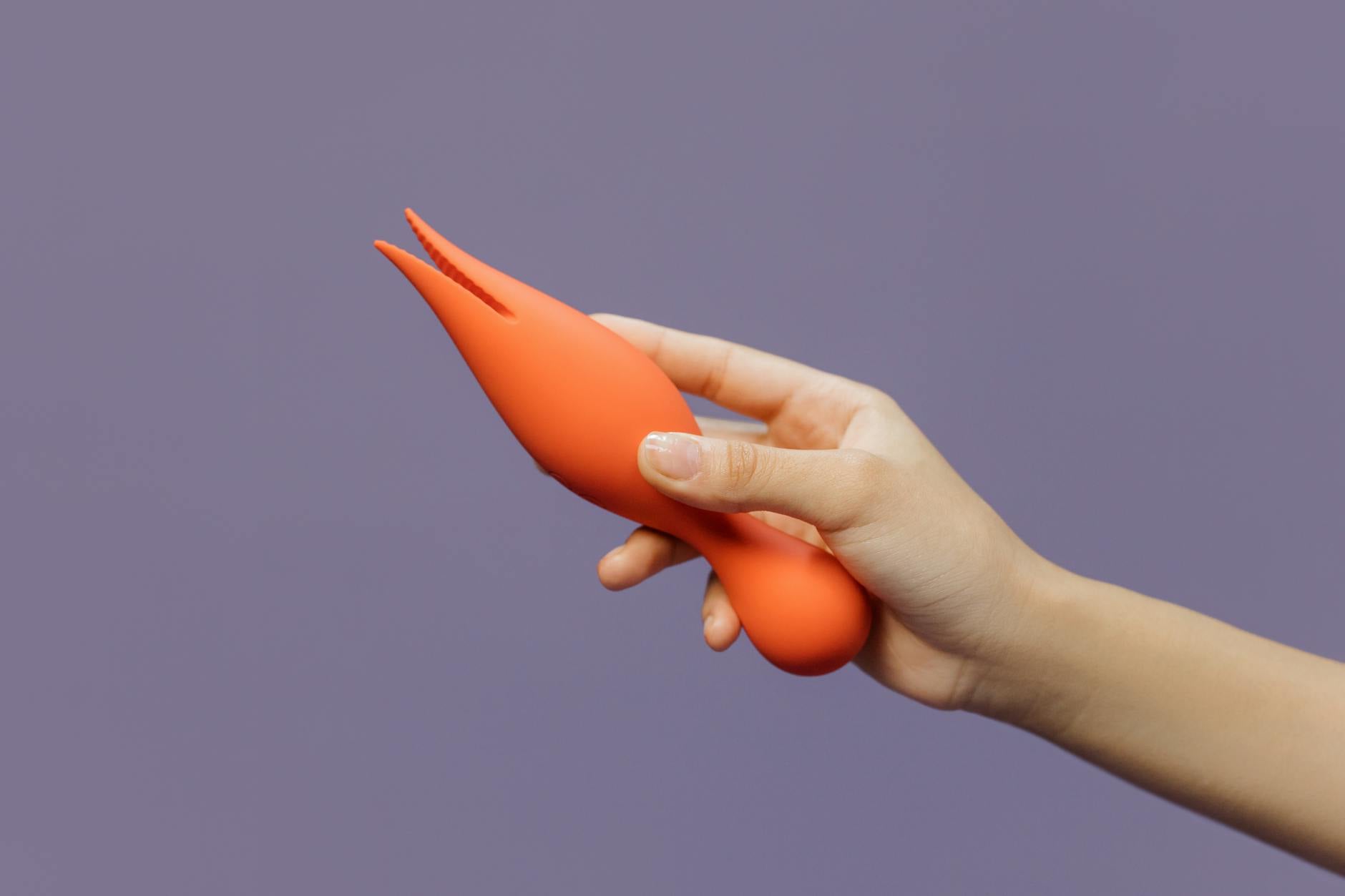
Best Lemon Vibrator Settings for Building Arousal Slowly When You Have Low Desire
Let's be real: when desire has flatlined, the last thing you need is someone telling you to "just relax" or insisting that a toy will magically fix everything. Low libido is complicated. It's hormonal, relational, neurological, and often deeply practical. You might be exhausted, stressed, on medication, post-partum, or simply disconnected from your own body after years of checking out.
What I've seen work is not forcing arousal. It's rebuilding it methodically, using a tool like a lemon vibrator strategically rather than just turning it on and hoping.
Understanding why desire drops in the first place
Before we talk about settings and technique, we need to acknowledge what's actually happening. Low libido is rarely about laziness or lack of attraction. It's your nervous system sending a signal that something is off. That signal is real and worth listening to.
Common culprits: chronic stress, relationship disconnection, depression or anxiety (especially when paired with SSRIs), thyroid imbalance, low iron, birth control shifts, and simply being touched out if you're parenting or caregiving. Sometimes it's all of the above at once.
The body doesn't produce desire on demand. Arousal is not a light switch you flip. It's a system that requires specific conditions to activate. When those conditions are missing, no vibrator is going to override your nervous system's "no thank you." What a lemon vibrator can do is create a path back to sensation when you're ready to take small steps.
Why lemon suction vibrators work differently for low-desire situations
Most traditional vibrators rely on direct friction. They need you to already be somewhat aroused to feel good. A lemon clitoral vibrator works through gentle suction and air-pulse stimulation, which means it can trigger arousal responses even when your body feels sluggish or disconnected.
This matters because it removes the pressure. You don't have to already want sex for the sensation to feel pleasurable. The physical stimulation can actually wake up your nerve endings and signal to your brain that pleasure is possible. That's neurologically sound, not a trick.
The three-phase approach to rebuilding arousal with a lemon vibrator
If you're starting from a place of genuine low desire, I recommend structuring your time into three distinct phases. You're not trying to have sex or even reach orgasm. You're just reconnecting.
Phase One: Sensation Exploration (Weeks 1-2)
Set aside 10-15 minutes when you're not tired, hungry, or irritable. This is non-negotiable. Not when your partner wants it, not when you "should," but when you genuinely have a bit of mental space.
Start with the lemon vibrator on the lowest setting. Pattern 1 on most modern lemon adult toys is barely a whisper. Place it on your inner thigh, your collarbone, your wrist. The clitoris is not the focus yet. You're just teaching your body that sensation can feel okay. No goal. No timeline.
Doing this consistently for two weeks changes something in your brain. You begin to develop a small positive association with pleasure, rather than dread or pressure.
Phase Two: Proximity Building (Weeks 3-4)
Once the thigh and neck feel neutral, move closer. Hover the vibrator near the vulva without direct contact. Use patterns 1-2. Let yourself feel anticipation without rushing toward it.
This is where many people get impatient and jump to "actual" use. Don't. Anticipation is arousal. Your clitoris is getting engorged with blood even if you don't consciously feel turned on. This is the foundation.
The specific settings that support slow arousal
Here's the practical part. If you're using a lemon suction vibrator, these are the patterns I suggest:
Levels 1-2: These are your baseline. Feather-light pressure, rhythmic but gentle. Use these for 3-5 minutes minimum before moving anywhere else. Think of this as foreplay with yourself.
Levels 3-4: Slightly increased intensity and possibly a pulsing rhythm. If level 2 felt neutral, level 3 might be the first place where you think "oh, that's actually kind of nice." Stay here until that feeling solidifies. This might take multiple sessions.
Levels 5-6: Increased pattern complexity. Your nervous system is now registering pleasure more consistently. Some people never need to go higher. That's completely fine.
The key difference between slow arousal building and regular use is time. You're not chasing sensation. You're giving your body permission to wake up on its own timeline.
Frequency and pacing matter more than intensity
One of the biggest mistakes I see is intensity creep. People start on level 2, feel nothing, jump to level 5, and then wonder why the vibrator stopped working. You've just numbed the nerve endings you were trying to rebuild.
Instead: use a lower setting more frequently. Three times per week for 15 minutes on level 2 beats once per week on level 6. Consistency trains your nervous system. Your body learns that pleasure is available and safe, not rare or frantic.
If you're using a lemon vibrator alongside a partner, involve them in the pacing conversation, not the session itself. Let them understand that you're rebuilding slowly and that touching you the way they usually do might actually set back your progress. They can hold space without participating, and that boundaries conversation often strengthens things on its own.
When to add connection to the equation
Once you're comfortable with solo sessions around week 4-5, you might notice desire showing up unexpectedly. That's the signal that your nervous system is shifting. At this point, you have options:
Continue solo until you feel genuinely interested in partnered touch. There's no rush to "graduate" to couples play.
Or, invite a partner to witness and support your exploration without expecting reciprocation. Many couples find that watching their partner reconnect to pleasure (while the vibrator does the work) is genuinely hot and emotionally connecting.
The lemon clitoral vibrator does the physical work. You and your partner do the emotional work.
Troubleshooting: What if nothing is happening
Sometimes people stick to this protocol for a month and still feel nothing. Before you assume the vibrator is useless or that you're beyond help, check a few things:
Are you actually rested? Low desire often lives alongside sleep deprivation. If you're running on 5-6 hours nightly, your nervous system cannot produce arousal. You're in survival mode. Fix sleep first. The lemon vibrator will wait.
Is there unaddressed resentment in the relationship? This is huge. You cannot build desire toward pleasure if you're angry at your partner and haven't said so. That's not a vibrator problem. That's a conversation problem. Consider working with a couples therapist.
Are you on medication that impacts libido? SSRIs, some blood pressure medications, and hormonal birth control can all reduce arousal. Talk to your prescriber. Sometimes switching timing or dose helps. Sometimes you need a different medication entirely.
Is there past trauma in your nervous system? If touch has ever been unwanted or unsafe, your body may have legitimate protective responses blocking arousal. A therapist trained in trauma and somatic work can help rewire that, often faster than you'd expect.
A lemon vibrator is a brilliant tool, but it's not magic. It works best when the environment around it is actually conducive to pleasure.
The mindset shift that changes everything
This is the part that matters most. Somewhere along the way, we internalize the message that if we're not constantly interested in sex, something is wrong with us. Low desire gets pathologized instead of understood as information.
Your body is not broken. It's communicating. When you rebuild arousal slowly with a lemon suction vibrator, you're not "fixing" yourself. You're listening to what your body actually needs and giving it that, without judgment.
That shift in mindset alone starts the rewiring process. The vibrator just gives you a concrete tool to practice it.
If you're starting from a place where desire has been absent for months or years, give yourself at least 6-8 weeks of consistent, low-pressure exploration. Some people find their desire returns within weeks. Others take longer. Both are normal. The point is that you're building a sustainable relationship with your own pleasure, not chasing an arbitrary outcome.
FAQ: Common questions about building arousal with lemon vibrators
How do I know if I'm using the vibrator too much or too little?
Too much: if you're using it multiple times daily or for sessions longer than 20-30 minutes, you might be overstimulating your nerve endings. Arousal building works best with adequate rest between sessions. Too little: if you're using it once every two weeks and expecting change, your nervous system doesn't have enough repetition to register the pattern. Aim for 2-4 times weekly with 48 hours between sessions.
Can I use a lemon vibrator if I'm on antidepressants that lower my libido?
Absolutely. In fact, lemon clitoral vibrators can be especially helpful because the suction mechanism sometimes triggers arousal more reliably than regular vibration when medications are dulling sensation. That said, talk to your prescriber about whether adjusting timing or dose might also help. Sometimes taking your SSRI at a different time of day opens up a window when you feel slightly more responsive. The vibrator plus the medication adjustment together can be really effective.
What if my partner gets discouraged that I'm not interested in sex with them?
This is where the conversation matters more than the tool. Your partner needs to understand that rebuilding arousal is not a rejection of them. It's a project you're undertaking for yourself, and it will eventually benefit both of you. Invite them to read articles about low libido. Share what you're doing with the vibrator and your timeline. Some couples find that scheduling non-sexual touch (massage, cuddling) while you're rebuilding arousal helps maintain closeness without pressure. How to Use a Lemon Vibrator With Your Partner After Rebuilding Trust has more on navigating this conversation.
Does using a vibrator alone make it harder to feel pleasure with a partner?
Not if you're intentional about it. In fact, the opposite often happens. When you understand your own arousal pattern through solo exploration, you can communicate that to your partner. You might say "I need about 10 minutes of slow touch before I'm ready for more." That's not a limitation. That's data that makes partnered sex better for everyone. Some people also find that using the lemon vibrator during partnered sex is the bridge they need to feel pleasure with their partner present.
What if I feel guilty taking time for solo pleasure when my partner is available?
That guilt is worth examining. You deserve time for your own pleasure, separate from your partner's needs or desires. This is not selfish. It's not a rejection. It's a non-negotiable part of rebuilding your relationship to sex and your body. If your partner cannot support that, that's relationship-level work to address. Your pleasure is not a resource they own.
How long before I feel "normal" desire again?
It depends on what caused the low desire in the first place. If it's stress, often 8-12 weeks of consistent exploration shifts things noticeably. If it's hormonal, you might need to address that separately while using the vibrator. If it's relational, you're looking at couples therapy alongside solo work. The lemon vibrator accelerates the process, but it's not the only variable. Be patient with yourself. Desire rebuilt slowly tends to be more stable and sustainable than desire that was never absent.
Where to start this week
Pick one afternoon or evening when you're not depleted. Set a timer for 12 minutes. Get the lemon vibrator on its lowest setting. Sit somewhere comfortable. Touch your own thigh with it and just notice what happens. No pressure. No goal. You're collecting data.
Do that twice this week. Same setup, same low setting. By the third time, your nervous system will recognize the pattern and start responding. That's all. That's the beginning.
Your body hasn't forgotten how to feel pleasure. It's just been on pause. A lemon clitoral vibrator is a conversation starter between you and your own arousal. The rest unfolds from there.
If you hit roadblocks or feel stuck after several weeks of consistent practice, a therapist trained in sexual health can help you untangle what's underneath the low desire. You don't have to do this alone.